


Introduction
The legal profession demands the highest ethics, professionalism, and accountability standards. Attorneys are expected to uphold the integrity of the legal system by adhering to strict ethical codes. However, disciplinary actions, including suspensions, can be imposed when lawyers fail to meet these standards.
In a recent disciplinary action, an attorney suspended from practice is due to violations of professional conduct. The suspension, handed down by the state’s bar association, stems from misconduct allegations, including conflicts of interest and failure to disclose essential information to clients.
The attorney, who has been in practice for over a decade, has been ordered to cease all legal activities for six months, pending a full review of their actions. This suspension reminds us of the high ethical standards expected of legal professionals and the importance of maintaining the justice system’s integrity.
This article delves into why attorneys get suspended, the consequences of such actions, notable cases, and their impact on their careers and clients.
| Aspect | Details |
| The attorney was suspended from practice | An attorney suspended from practice faces a temporary or permanent loss of their legal license due to ethical violations, misconduct, or regulatory non-compliance. |
| Reasons for Suspension | Ethical violations, financial misconduct, criminal behaviour, negligence, and failure to meet education requirements. |
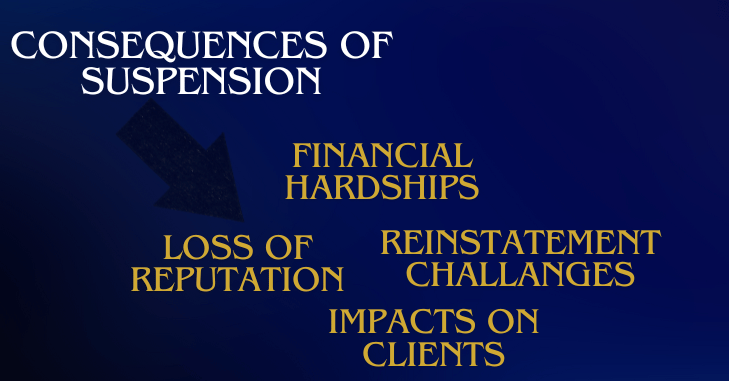
| Consequences | Loss of reputation, financial hardship, impact on clients, reinstatement challenges. |
| Notable Cases | Michael Cohen (fraud, lying to Congress), F. Lee Bailey (financial misconduct), Rudy Giuliani (false election claims). |
| Ways to Avoid Suspension | Adhering to ethical guidelines, proper financial management, continuing legal education, and seeking legal guidance. |
| Reinstatement Process | Character review, completing education courses, proving rehabilitation, rebuilding public trust. |
Common Grounds for Attorney Suspensions and the Discipline Process
Attorneys can be suspended from the practice of law for a variety of serious professional and ethical violations that undermine the trust and integrity essential to legal practice. Typical reasons include ethical misconduct such as mishandling client funds, failing to meet professional obligations, criminal convictions, or breaches of legal ethics rules, which prompt disciplinary authorities to intervene and protect the public and the justice system. State bar associations and disciplinary committees may impose temporary or indefinite suspensions depending on the severity of the offense, during which a lawyer is prohibited from representing clients, filing legal documents, or appearing in court. In many jurisdictions, reinstatement after suspension is possible but may require completion of specific conditions such as additional education, demonstrating rehabilitation, or court approval. These disciplinary mechanisms aim to uphold professional standards and maintain public confidence in the legal system.
Attorney Suspended from Practice
An attorney suspended from practice is due to various reasons, including professional misconduct, ethical violations, criminal charges, or failure to meet continuing legal education requirements. State bar associations or disciplinary committees often impose such suspensions after investigating allegations like fraud, misrepresentation, conflicts of interest, or neglect of client matters. A suspension can be temporary or indefinite, depending on the severity of the violation.
During this period, the attorney is prohibited from representing clients, filing legal documents, or appearing in court. In some cases, reinstatement is possible after fulfilling specific conditions, such as completing additional training, paying fines, or demonstrating rehabilitation. However, repeated offences or serious misconduct may lead to permanent disbarment, preventing the attorney from ever practising law again.
Reasons for Attorney Suspensions
Attorneys may face suspension for various reasons, including ethical violations, criminal activities, misconduct, or failure to comply with professional regulations. Some of the most common causes include:
Ethical Violations
Attorneys are bound by ethical rules, including honesty, integrity, and fairness. Violating these rules can lead to disciplinary action. Common ethical breaches include:
- Conflicts of interest
- Breach of client confidentiality
- Misrepresentation or fraudulent conduct
Financial Misconduct
Handling client funds improperly is a major reason attorneys face suspension. This includes:
- Embezzlement of client funds
- Failure to maintain proper escrow accounts
- Overcharging or inflating legal fees
Criminal Behavior
Criminal charges can lead to suspension, whether directly related to legal practice or not. Some offences include:
- Fraud and bribery
- Drug- or alcohol-related offences
- Violent crimes
Incompetence or Negligence
Failure to provide competent representation can also result in suspension. Examples include:
- Repeatedly missing court deadlines
- Inadequate legal research or preparation
- Providing incorrect legal advice
Failure to Meet Continuing Education Requirements
Attorneys must stay current with legal knowledge through continuing education courses. Failure to meet these requirements can result in disciplinary action.
Consequences of Suspension
An attorney’s suspension can have far-reaching consequences, not just for their career but also for their clients and legal community.
Loss of Reputation
A suspension tarnishes an attorney’s professional reputation, making it difficult for them to regain the trust of clients and colleagues.
Financial Hardship
Suspended attorneys lose their primary source of income, which can have long-term financial repercussions.
Impact on Clients
If their attorney is suddenly suspended, clients may be left in difficult situations. They may have to find new representation, leading to delays and added legal costs.
Reinstatement Challenges
Returning to legal practice after suspension can be difficult. Attorneys may have to undergo re-examinations, ethics courses, and other corrective measures.
Notable Cases of Attorney Suspensions
Several high-profile cases highlight the consequences of attorney misconduct.
Michael Cohen
Michael Cohen, former attorney for Donald Trump, was disbarred and suspended due to crimes including tax evasion and lying to Congress. His case demonstrated how legal professionals could face severe repercussions for unethical conduct.
F. Lee Bailey
Famed for his involvement in the O.J. Simpson case, F. Lee Bailey was disbarred in Florida due to financial misconduct. His legal troubles highlighted the dangers of mishandling client funds.
Rudy Giuliani
In 2021, authorities suspended the former mayor of New York City and attorney for Donald Trump for making false statements regarding election fraud. His case showcased how political and ethical misconduct could lead to disciplinary action.
How Attorneys Can Avoid Suspension
Attorneys can protect their licenses and careers by adhering to ethical and legal obligations. Here are some key strategies:
Adhering to Ethical Guidelines
Following the American Bar Association (ABA) guidelines and state bar rules can help attorneys maintain their standing.
Proper Financial Management
Maintaining accurate and transparent financial records ensures compliance with financial regulations and avoids allegations of embezzlement or fraud.
Continuing Legal Education
Attorneys should stay updated with evolving laws and legal practices by attending courses and training sessions.
Seeking Legal Guidance
If faced with an ethical dilemma, attorneys should seek advice from senior lawyers or legal ethics boards to avoid misconduct.
Reinstatement After Suspension
Suspended attorneys may seek reinstatement by demonstrating good conduct and complying with all required corrective actions.
Meeting Reinstatement Requirements
Reinstatement requirements vary by state and can include:
- Passing a character and fitness review
- Completing continuing legal education courses
- Providing evidence of rehabilitation
Gaining Public Trust
Attorneys seeking reinstatement must rebuild their professional reputation through ethical and responsible behaviour.
Conclusion
Attorney suspensions are crucial to uphold legal ethics and maintain public trust in the judicial system. While the consequences of suspension can be severe, attorneys can take proactive steps to ensure compliance with professional standards and avoid misconduct.
For those who have faced suspension, rehabilitation and adherence to ethical practices can provide a path toward reinstatement and career restoration. By prioritizing integrity and responsibility, attorneys can safeguard their professional futures and continue serving the legal community effectively.
Apart from that if you want to know about “Brita Lawsuit: Everything You Need to Know a Case Study in Product Liability, Implications for Consumers and More Info” then please visit our “Legal Advice” Category.
FAQs
A suspended attorney cannot practice law or commission and notarize papers.
Fees paid in advance for legal services are known as retainers. The fee and agreement vary slightly depending on why you need the lawyer. A general retainer is a contract that is valid for a specific amount of time.
The word “suspend” refers to temporarily disqualifying someone from government contracting and subcontracting by established administrative processes.
Suspension is not a valid form of discipline and does not indicate that an employee has committed any wrongdoing.
If the suspension lasts no more than six months, the suspending authority may designate a replacement for the suspended government employee.

