

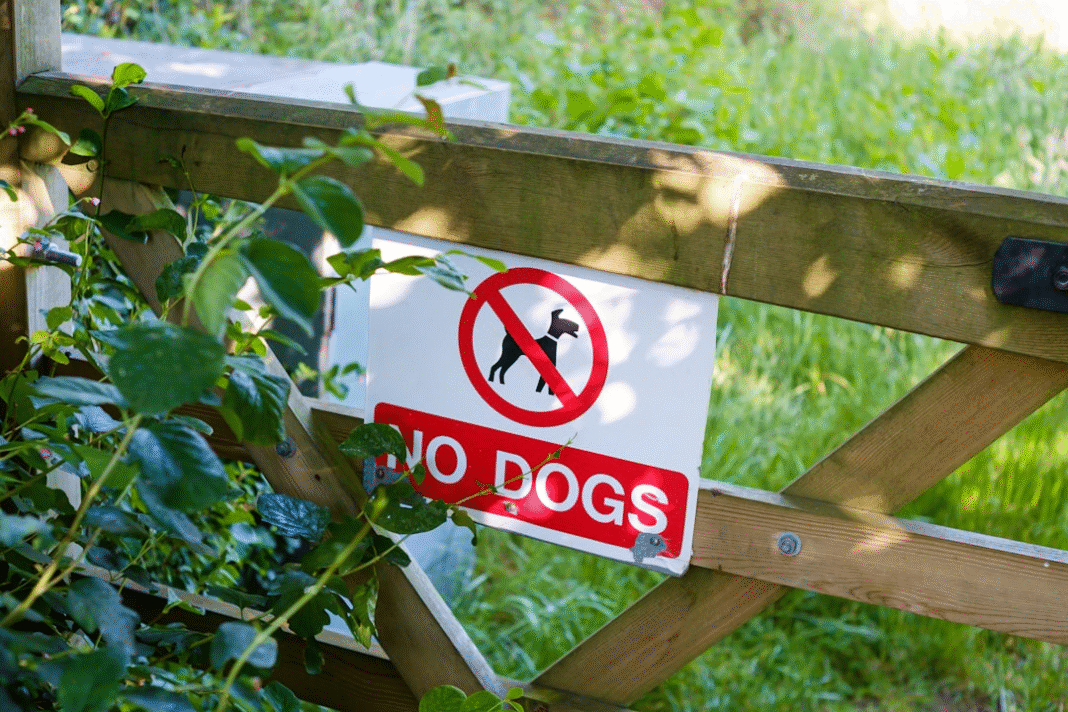

Civil Liability: The “One-Bite Rule” vs. Negligence
In Texas, a dog owner’s liability for a bite or attack typically falls under one of two legal theories: the “one-bite rule” or general negligence. Unlike some states with strict liability statutes for dog bites, Texas courts have historically relied on these common law principles.
The “One-Bite Rule” and Strict Liability
The “one-bite rule” is a long-standing legal doctrine in Texas, affirmed by the Texas Supreme Court in the case of Marshall v. Ranne. This rule holds that a dog owner can be held strictly liable for injuries caused by their dog if they knew, or reasonably should have known, that their dog had dangerous propensities or a history of aggression. The term “one-bite” is somewhat misleading, as it doesn’t literally mean a dog gets a “free bite.” Instead, it implies that the owner is only liable if they had prior notice of the dog’s potential to bite.
Proving the owner’s knowledge of dangerous propensities is crucial under this rule. This doesn’t always require a previous bite. Evidence of a dog’s prior aggressive behavior, such as growling, lunging, snapping, baring teeth, or straining on a leash in a threatening manner, can be sufficient to establish that the owner was on notice. For instance, if a dog frequently snarls at passersby or attempts to bite the mail carrier, the owner is likely aware of its aggressive tendencies. Texas law dictates that owners who know their pets might be dangerous are strictly liable if their dog attacks someone.
Negligence
Even if the “one-bite rule” cannot be proven, a dog owner can still be held liable for a dog bite under the theory of negligence. Negligence occurs when a dog owner fails to exercise reasonable care in controlling their dog, and this failure directly leads to an injury. To establish negligence, the injured party must prove four key elements:
- Duty of Reasonable Care: The dog owner owed a duty to exercise reasonable care to prevent their dog from harming others. This is a general duty of all pet owners to manage their animals responsibly.
- Breach of Duty: The owner breached this duty by acting carelessly or failing to act when they should have. Examples include allowing a dog to roam off-leash in an area with a leash law, failing to properly secure a gate, or not controlling a dog known to be overly boisterous around vulnerable individuals.
- Causation: The owner’s breach of duty directly caused the dog bite or injury. There must be a clear link between the owner’s actions (or inactions) and the harm suffered.
- Damages: The injured party suffered actual damages, such as medical expenses, lost wages, pain and suffering, or other losses.
A specific form of negligence relevant to dog bite cases is negligence per se. This applies when a dog owner violates a state law or local ordinance designed to protect the public, and that violation directly causes an injury. For example, if a city has a leash law, and a dog bites someone while running at large in violation of that law, negligence per se may be presumed, simplifying the victim’s burden of proof. While Texas does not have a statewide leash law, many municipalities have their own, and violating these can lead to liability.
Filing a Claim: Key Legal Considerations
If you or someone you know has been bitten by a dog in Texas, understanding the legal process for filing a claim is essential.
Statute of Limitations
One of the most critical aspects is the statute of limitations. The Texas personal injury statute of limitations states that personal injury lawsuits, including dog bite lawsuits, must be filed in court “not later than two years after the day the cause of action accrues.” This means that an injured party generally has two years from the date of the dog bite incident to file a lawsuit. This deadline is set by Tex. Civ. Prac. and Rem. Code § 16.003. Missing this deadline can result in the permanent loss of the right to pursue compensation, regardless of the merits of the case. For minors, the statute of limitations is often tolled until they reach the age of majority, meaning they may have until their 20th birthday to file a claim.
Owner Defenses
Dog owners facing a lawsuit may raise several defenses to challenge liability:
- Provocation: If the injured party provoked or tormented the dog, the owner might argue that the bite was a direct result of the victim’s actions. Examples of provocation can include teasing, hitting, or otherwise agitating the animal. However, this defense is often scrutinized to ensure the provocation was not merely accidental or minor.
- Trespassing: Generally, a dog owner is not liable for injuries to a person who was trespassing on their property without permission. Property owners are not strictly liable for injuries to trespassers unless their actions were particularly egregious.
- Assumption of Risk: This defense argues that the injured person knowingly and voluntarily exposed themselves to the risk of being bitten. This is often difficult to prove, especially if the victim did not fully understand the danger.
Comparative Negligence
Texas follows a modified form of comparative negligence, also known as “proportionate responsibility,” as outlined in Tex. Civ. Prac. and Rem. Code §§ 33.01-03. This means that if the injured party is found to be partially at fault for their own injuries, their recoverable damages will be reduced by their percentage of fault. For example, if a victim is awarded $100,000 in damages but is found to be 20% at fault, they would only receive $80,000.
Crucially, Texas employs a “51% bar rule.” If the injured party is found to be 51% or more responsible for their injuries, they are completely barred from recovering any damages from the dog owner. This means if you are found partially at fault for the injury, damages can be reduced, and if your fault exceeds 50%, you recover nothing.
Understanding the “Dangerous Dog” Classification in Texas

Texas law provides a specific classification for “dangerous dogs,” which comes with increased responsibilities and potential penalties for owners. This classification is defined in the Tex. Health and Safety Code § 822.041.
A dog is legally defined as “dangerous” if it:
- Makes an unprovoked attack on a person that causes bodily injury and occurs in a place other than an enclosure in which the dog was being kept and that was reasonably certain to prevent the dog from leaving the enclosure on its own; or
- Commits unprovoked acts in a place other than an enclosure in which the dog was being kept and that was reasonably certain to prevent the dog from leaving the enclosure on its own and those acts cause a person to reasonably believe that the dog will attack and cause bodily injury to the person.
This definition clarifies that a dog’s history of violent or threatening behavior can lead to this designation. The law specifically refers to attacks on persons for this classification, not other animals, though attacks on animals can still lead to civil liability under negligence.
Requirements and Consequences for Dangerous Dog Owners
Once a dog is officially classified as “dangerous” by an animal control authority or a court, the owner faces stringent requirements designed to protect public safety. Owners of a dangerous dog have increased responsibilities and restrictions, including:
- Registration with Animal Control: The owner must register the dog with the local animal control authority within 30 days of the dog being declared dangerous. This includes providing proof of rabies vaccination, microchipping, and often paying an annual registration fee.
- Secure Enclosure Requirements: The dog must be kept in a secure enclosure at all times. Texas law defines a “secure enclosure” as a fenced area or structure that is locked, capable of preventing the entry of children, and designed to prevent the dog from escaping.
- Leash and Muzzle Rules in Public: When outside the secure enclosure, the dog must be securely restrained by a leash and under the immediate control of a person. In many jurisdictions, a dangerous dog may also be required to wear a muzzle when in public.
- Liability Insurance: The owner must obtain and maintain liability insurance coverage of at least $100,000 to cover damages for any injuries the dog might cause. This financial responsibility ensures that victims have a source of compensation if another incident occurs.
- Notifying Authorities of Sale or Move: If a dangerous dog is sold, given away, or moved to a new address, the owner must notify the animal control authority of the change in ownership or location.
- Compliance with Local Regulations: Owners must also comply with any applicable municipal or county regulations, which may impose additional or stricter requirements than state law.
Penalties for Non-Compliance
Failure to comply with these regulations carries significant legal consequences. An owner who violates the dangerous dog provisions can face:
- Class C Misdemeanor: For initial violations, such as failing to register the dog or maintain a secure enclosure, the owner can be charged with a Class C misdemeanor, punishable by a fine not to exceed $500.
- Increased Penalties for Repeat Offenses: Subsequent convictions for non-compliance can escalate to Class B misdemeanors, which carry higher fines and potential jail time.
- Seizure of the Dog: Animal control authorities have the right to seize a dangerous dog if the owner fails to comply with the regulations.
- Potential for Court-Ordered Euthanasia: In severe cases, particularly if the dog causes further harm due to the owner’s non-compliance, a court may order the dog to be humanely destroyed. If a dangerous dog attacks a person again, the owner can face further legal action, and the dog may be ordered to be put down.
Criminal Liability and Lillian’s Law: When a Bite Becomes a Felony

While civil liability focuses on compensating victims for their damages, Texas law also addresses criminal liability for dog owners in severe cases. This is primarily governed by Lillian’s Law, which was enacted in 2007, amending Tex. Health and Safety Code § 822.005.
Lillian’s Law was a direct response to the tragic death of Lillian Stiles, a 76-year-old woman who was fatally mauled by a pack of dogs. The law aims to hold dog owners criminally accountable when their negligence or recklessness leads to serious injury or death.
Under Lillian’s Law, a dog owner can face criminal charges if their dog causes serious bodily injury or death under specific circumstances:
- Criminal Negligence Standard: The owner must have acted with criminal negligence in failing to secure the dog. This means the owner should have been aware of a substantial and unjustifiable risk that their failure to act would cause serious bodily injury or death, and they disregarded that risk.
- Unprovoked Attack: The attack by the dog must be unprovoked.
- Serious Bodily Injury or Death: The attack must result in “serious bodily injury” or death. Texas law defines “serious bodily injury” as an injury characterized by severe bite wounds or severe ripping and tearing of muscle that would cause a reasonably prudent person to seek treatment from a medical professional and would require hospitalization, regardless of whether the person actually sought medical treatment.
- Attack Occurs Off-Property: The attack must occur off the owner’s property or outside a secure enclosure where the dog was kept.
A Texas dog owner can only be charged with a felony if their pet has attacked without being provoked and either killed or seriously injured the victim. This law significantly impacts dog owner liability in Texas by introducing severe criminal penalties for irresponsible ownership. For a comprehensive overview of these regulations, including the specifics of the “one-bite rule” and negligence, exploring resources that explain Texas dog bite laws explained can provide valuable context.
Penalties Under the Criminal Dog Bite Laws in Texas
The penalties under Lillian’s Law are severe and reflect the gravity of the harm caused:
- Third-Degree Felony for Serious Bodily Injury: If a dog attack causes serious bodily injury due to the owner’s criminal negligence, it is a third-degree felony. This carries a potential prison sentence of two to 10 years and a fine not exceeding $10,000.
- Second-Degree Felony for Death: If the dog’s actions result in the death of a person, the offense is liftd to a second-degree felony. This can lead to a prison sentence of two to 20 years and a fine not exceeding $10,000.
These criminal charges are distinct from civil lawsuits but can run concurrently. They emphasize the state’s commitment to holding owners accountable for their dogs’ actions when gross negligence leads to tragic outcomes. The owner’s prior knowledge of the dog’s dangerousness is a critical factor in determining criminal culpability, as it speaks to the level of negligence involved.
Post-Bite Procedures: Reporting and Quarantine Requirements
After a dog bite incident in Texas, specific procedures are mandated to ensure public health and safety, particularly concerning the risk of rabies.
Mandatory Reporting
Texas state law requires that all animal bites that break the skin be reported. While medical professionals and local authorities are obligated to report, victims should also file a report with local law enforcement or animal control for documentation.
- Who Must Report: Doctors, veterinarians, and any person who has knowledge of an animal bite must report it.
- Reporting to Local Rabies Control Authority (LRCA): All cities and counties in Texas must designate a Local Rabies Control Authority (LRCA) who is responsible for investigating animal bites, ensuring proper management of biting animals, and enforcing state and local rabies laws. The bite should be reported to the LRCA in the jurisdiction where the bite occurred.
Reporting the bite is crucial not only for public health tracking and rabies prevention but also for creating an official record of the incident. This record can be vital if the victim later decides to pursue a civil claim for damages, as it helps establish the facts of the attack.
Quarantine Process
If a dog bites a person, Texas dog bite laws state that any dog that attacks a person must be quarantined for at least 10 days. The purpose of this 10-day observation period is to monitor the dog for signs of rabies.
- Rabies Risk Assessment: The LRCA determines the rabies risk based on the animal’s vaccination status, history, and species. Domestic animals (dogs, cats, ferrets) are typically quarantined. High-risk animals (skunks, bats, foxes, coyotes, raccoons) are usually euthanized and tested immediately due to the higher likelihood of rabies transmission.
- Quarantine Locations: Quarantine means placing an animal in a facility that provides absolute security, no contact with other animals or people except for care, and observation twice daily by a qualified person. This must be in a facility licensed by the DSHS or a veterinary clinic.
- Home Confinement Rules: The LRCA may authorize home confinement if certain conditions are met, such as the animal being vaccinated, not a stray, and the home having a secure enclosure. The owner must monitor the animal and report any changes, and the LRCA or a veterinarian must observe the animal on the first and last days of quarantine. Local policies may prohibit or have stricter requirements for home confinement.
- Owner Responsibility for Costs: The owner of the biting animal is required by state law to pay the cost of the quarantine, whether it occurs at a facility or under home confinement. If the animal becomes sick or dies during quarantine, it must be examined by a veterinarian, and if rabies is suspected, its head must be tested.
Frequently Asked Questions About Dog Bite Laws in Texas
Does Texas have a statewide leash law?
No, Texas does not have a statewide leash law. While some states have blanket rules requiring dogs to be leashed in public, Texas leaves this up to individual municipalities and counties. This means that leash laws vary significantly from one city or county to another.
Dog owners are responsible for their dog’s actions when running at large, even in areas without a specific leash law. Many cities, such as Dallas and Austin, have their own specific ordinances dictating when and where dogs must be leashed. For example, in Austin, dogs must be on a leash whenever they are off the owner’s property, unless they are in a designated off-leash area.
The implications of local leash laws are significant for liability. As mentioned earlier, violating a local leash law can be considered negligence per se, making it easier for a victim to prove negligence if an releaseed dog causes an injury. This applies whether the incident occurs in a public place or if an releaseed dog wanders onto private property and causes harm.
Can a landlord be held liable for a tenant’s dog?
Yes, a landlord can be held liable for a dog bite that occurs on their property, but only under specific conditions. Landlord liability is not automatic and typically arises from negligence. A landowner or landlord may bear liability for a dog bite or attack if:
- Knowledge of Dog’s Danger: The landlord was aware that a tenant’s dog had dangerous propensities or a history of aggression. This “knowledge” is key.
- Ability to Act: The landlord had the ability to remove the dog or take other reasonable steps to prevent harm (e.g., by including clauses in the lease agreement regarding dangerous animals or by enforcing existing rules).
- Failure to Act: Despite knowing about the danger and having the ability to act, the landlord failed to take reasonable measures.
- Common Area Attack: The attack occurred in a common area of the property (e.g., a shared courtyard, hallway, or parking lot) that the landlord controlled and was responsible for maintaining.
- Negligent Property Maintenance: The landlord’s own negligence in maintaining the property contributed to the attack (e.g., a broken fence in a common dog run that allowed a known dangerous dog to escape and bite someone).
If these conditions are met, a landlord could be held financially responsible for damages resulting from a dog bite.
What should I do immediately after being bitten by a dog?
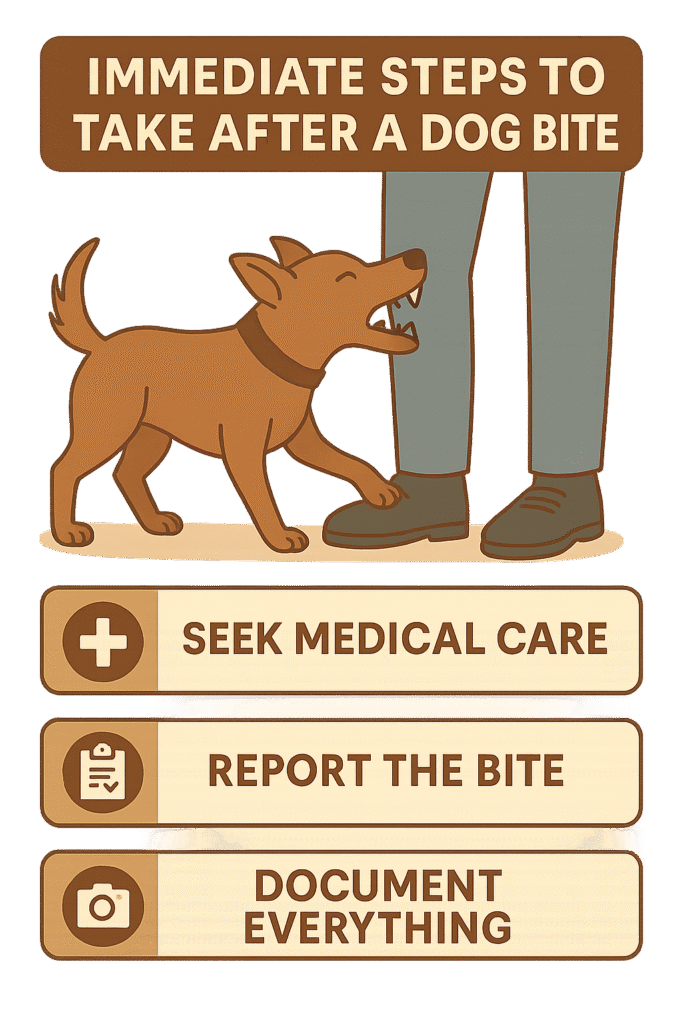
Taking immediate and appropriate steps after a dog bite is crucial for your health, safety, and any potential legal claim.
- Seek Medical Care: Your top priority should be your health. Wash the wound thoroughly with soap and water as soon as possible to help prevent infection. Then, consult a physician immediately, even if the bite seems minor. Dog bites can carry a high risk of infection, including rabies and tetanus. A medical professional can assess the wound, clean it properly, and determine if stitches, antibiotics, or a tetanus shot are needed.
- Identify the Dog and Owner: If possible and safe to do so, identify the dog and its owner. Obtain the owner’s name, contact information, and details about the dog (breed, name, vaccination status). This information is vital for reporting and potential legal action.
- Report the Bite: Report the dog bite to your local animal control authority and, if necessary, to the police. This creates an official record of the incident, which is important for public safety and any future legal proceedings. Texas law requires all animal bites to be reported. Animal control will investigate the incident and may initiate the 10-day quarantine period for the dog to observe it for rabies.
- Document Everything: Document the injury and the scene comprehensively. Take clear photos of your injuries immediately after the bite and as they heal. Also, photograph the location where the bite occurred. Gather contact information for any witnesses. Keep detailed records of all medical treatments, bills, and any lost wages due to the injury. This evidence will be invaluable if you decide to pursue a personal injury claim.
Conclusion: Promoting Responsible Dog Ownership in Texas
Understanding Texas dog bite laws is not just about legal jargon; it’s about fostering a safer community for everyone. As this guide has shown, dog ownership in Texas comes with significant responsibilities, ranging from civil liability under the “one-bite rule” and negligence to potential criminal charges under Lillian’s Law for severe incidents.
Responsible dog ownership goes beyond simply providing food and shelter. It encompasses:
- Training and Socialization: Properly training and socializing your dog from a young age can significantly reduce the likelihood of aggressive behavior.
- Proper Restraint: Always ensure your dog is adequately restrained, whether through secure fencing at home or a leash in public, in compliance with local ordinances.
- Awareness of Your Dog’s Behavior: Pay close attention to your dog’s temperament and any signs of aggression. If your dog exhibits dangerous propensities, take immediate action to manage and mitigate those risks.
- Compliance with Laws: Register your dog, keep vaccinations current, and adhere to all local and state regulations, especially if your dog is classified as “dangerous.”
Public safety is paramount. When dog owners understand and fulfill their legal duties, it protects not only potential victims but also their own beloved pets from legal repercussions. By promoting responsible dog ownership, we can work towards a community where both people and animals can coexist safely and harmoniously. Understanding these legal consequences ultimately helps prevent incidents and ensures a more secure environment for all Texas residents.
Want to know about “Types of Injury Cases You Can Trust Hughey Law Firm to Handle with Expertise” Check out our Accidents Law category.

