
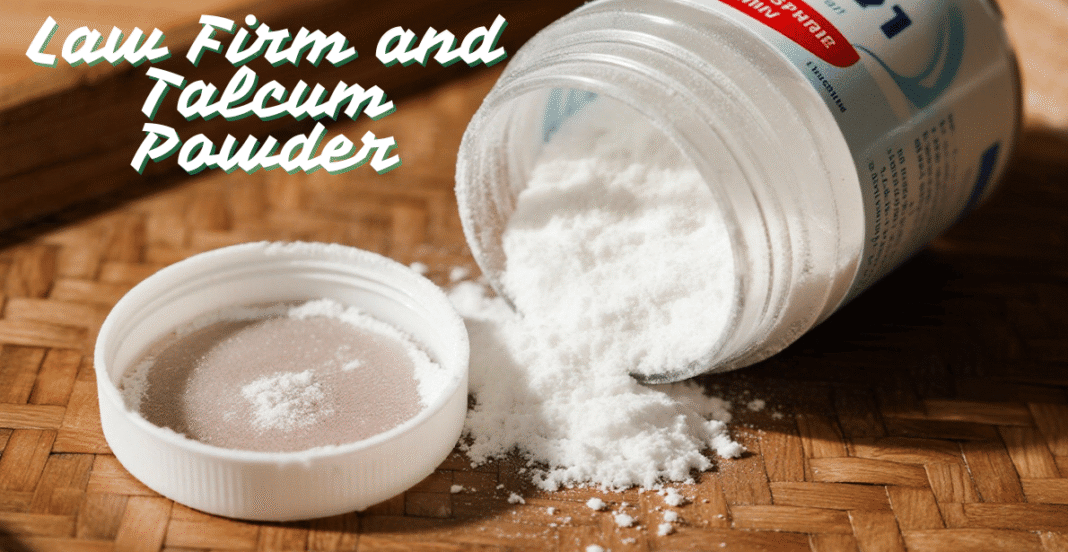
Beasley Allen and Talcum Powder Litigation: Verdicts and Status

-

Beasley Allen is one of the plaintiffs’ firms at the center of the talcum powder litigation against Johnson & Johnson, holding court-appointed leadership roles in the federal multidistrict litigation and serving as co-counsel on several of the largest verdicts in the case’s history — including the 2018 St. Louis judgment of roughly $4.69 billion, later reduced on appeal to about $2.12 billion. The Montgomery, Alabama firm has also been among the most vocal opponents of Johnson & Johnson’s three attempts to resolve talc liability through a subsidiary bankruptcy, all of which courts rejected.

As of 2026 the litigation remains active and unresolved. Tens of thousands of claims are consolidated in federal court in New Jersey, with additional cases proceeding in state courts across the country. Johnson & Johnson continues to deny that its talc products caused cancer and maintains that decades of scientific testing support their safety. This article explains the firm’s role, the underlying science, the procedural history, and what someone considering a claim should realistically expect. It is general information about ongoing litigation and is not legal advice; anyone with a potential claim should consult a licensed attorney about their own circumstances, because deadlines and requirements vary substantially by state.

Aspect Details
Firm Beasley Allen Crow Methvin Portis & Miles, P.C.
Founded 1979, by Jere L. Beasley, a former Lieutenant Governor of Alabama
Headquarters Montgomery, Alabama, with additional offices including Atlanta
Practice focus Mass torts, product liability, personal injury, consumer and environmental litigation — plaintiffs’ side only
Role in talc litigation Court-appointed leadership in the federal MDL; trial counsel in multiple state court cases
Alleged injuries Ovarian cancer and mesothelioma linked to long-term talc use
Defendant’s position Johnson & Johnson denies causation and denies its talc contained asbestos
Federal MDL MDL No. 2738, District of New Jersey
Bankruptcy attempts Three subsidiary Chapter 11 filings between 2021 and 2024; all dismissed
Fee structure Contingency, commonly in the range of one-third to 40 percent, plus case costs
Time limits State statutes of limitations, often one to six years from diagnosis or discovery

Who Beasley Allen Is

Beasley Allen was founded in 1979 by Jere Beasley, who had previously served as Lieutenant Governor of Alabama. The firm represents plaintiffs exclusively — it does not defend corporations — and is organized into sections covering mass torts, personal injury, consumer fraud, toxic torts, and employment law.

Its national profile came from earlier mass tort work, including pharmaceutical litigation and its role for the State of Alabama in litigation arising from the 2010 Deepwater Horizon oil spill. Within the talc litigation, attorneys from the firm’s mass torts section — led by Andy Birchfield, with Leigh O’Dell serving in a court-appointed co-lead role on the plaintiffs’ steering committee in the federal MDL — have handled discovery coordination, expert development, and trial work across multiple jurisdictions. Court-appointed leadership positions in an MDL are significant: they carry responsibility for common discovery, expert witness strategy, and settlement negotiation on behalf of thousands of claimants, not just a firm’s own clients. The firm’s Beasley Allen Law Firm office in Atlanta handles a share of that regional caseload.

Courtroom setting representing product liability litigation

The Underlying Science, Stated Fairly

Talc is a naturally occurring magnesium silicate mineral, valued in cosmetics for absorbing moisture and reducing friction. The health concern rests on two related but distinct theories, and it is worth separating them because they carry different evidentiary weight.

Theory one: asbestos contamination. Talc and asbestos can form in geologically adjacent deposits, which creates a risk of cross-contamination during mining unless the ore is carefully sourced and tested. Asbestos is a recognized human carcinogen and the established cause of mesothelioma. This is the stronger causal chain, and it underpins the mesothelioma claims.

Theory two: talc itself and ovarian cancer. Plaintiffs allege that talc particles applied to the perineal area can migrate to the ovaries and cause chronic inflammation over years of use, elevating ovarian cancer risk. The epidemiological record here is genuinely contested. Case-control studies dating back to Cramer’s work in 1982 have repeatedly found modest positive associations; several large prospective cohort studies have not found a statistically significant association. Both sides have credentialed experts, and this disagreement is the core scientific battleground of the litigation.

Regulatory classifications

  • Asbestos-containing talc has long been classified by the International Agency for Research on Cancer as carcinogenic to humans (Group 1).
  • Perineal use of talc-based body powder was classified by IARC in 2006 as possibly carcinogenic to humans (Group 2B).
  • In 2024, an IARC working group reclassified talc itself as probably carcinogenic to humans (Group 2A), citing limited evidence in humans for ovarian cancer, sufficient evidence in experimental animals, and strong mechanistic evidence. IARC classifications describe the strength of evidence that something can cause cancer, not the magnitude of risk in ordinary use — a distinction that both plaintiffs and defendants have characterized to their advantage.

Alongside the scientific record, plaintiffs have relied heavily on documentary evidence. A widely reported 2018 Reuters investigation described internal Johnson & Johnson documents indicating that the company was aware, over a period spanning decades, of test results showing small amounts of asbestos in its talc, and that this information was not disclosed to regulators or the public. Johnson & Johnson has disputed the characterization of those documents and maintains its talc has always been asbestos-free.

Major Verdicts and What Happened to Them

Jury verdicts in this litigation have produced headline numbers, but very few have been paid at the figure announced. Appellate reduction, reversal, and retrial are the norm in mass tort litigation, and any honest account has to include what happened afterward.

Case Year Jury award Outcome on appeal
Fox v. Johnson & Johnson (Missouri) 2016 $72 million Vacated on jurisdictional grounds
Ristesund (Missouri) 2016 $55 million Also affected by later jurisdictional rulings
Ingham and 21 others (Missouri) 2018 Approximately $4.69 billion Reduced to roughly $2.12 billion; affirmed by Missouri appellate courts; the U.S. Supreme Court declined review in 2021
Various mesothelioma trials 2019–2025 Ranging from single-digit millions to several hundred million Mixed — some affirmed, some reduced, some reversed; Johnson & Johnson has also won defense verdicts

The Ingham case is the most significant to date. Twenty-two women and their families brought consolidated claims in Missouri state court, and Beasley Allen served as co-counsel. The jury’s punitive award was substantially reduced by the Missouri Court of Appeals, but the reduced judgment survived review and was ultimately paid with interest, making it one of the largest product liability recoveries in American history.

It is equally important to note that Johnson & Johnson has prevailed in a meaningful number of trials, and several plaintiff verdicts have been overturned. Anyone assessing the strength of a potential claim should not treat the largest reported verdicts as representative of typical outcomes.

Johnson & Johnson’s Response and the Bankruptcy Strategy

The company’s public position has been consistent: it denies that its talc products contain asbestos, denies that they cause ovarian cancer or mesothelioma, and characterizes the plaintiffs’ science as methodologically flawed. In May 2020 it discontinued talc-based baby powder in the United States and Canada, reformulating with cornstarch, and in 2022 announced it would end talc-based sales globally. The company attributed those decisions to declining demand and misinformation rather than to safety concerns.

The more consequential development has been procedural. Beginning in October 2021, Johnson & Johnson pursued a corporate restructuring — widely described as a “Texas two-step” — in which talc liabilities were assigned to a newly created subsidiary that then filed for Chapter 11 bankruptcy, with the aim of resolving all present and future claims through a bankruptcy trust rather than through jury trials.

  • First attempt (2021): LTL Management LLC filed Chapter 11. In January 2023 the Third Circuit Court of Appeals dismissed the case, holding that the entity was not in financial distress and therefore could not properly access bankruptcy protection.
  • Second attempt (2023): A refiling accompanied by a settlement proposal of roughly $8.9 billion was also dismissed later that year.
  • Third attempt (2024): A prepackaged filing through a further subsidiary, seeking approval of a plan valued at around $8 billion to $9 billion over 25 years, was rejected by a Texas bankruptcy court in March 2025. Following that ruling the company stated it would return to defending cases in the tort system.

Beasley Allen was among the firms that publicly and formally opposed each of these filings, arguing that a solvent multinational should not be able to use the bankruptcy code to cap and compress claims that would otherwise be tried before juries. Supporters of the strategy argue the opposite — that an aggregate trust delivers compensation faster and more equitably than a decades-long trial calendar in which early claimants recover heavily and later ones may recover nothing.

Legal documents and case files on a desk

Where the Litigation Stands

The federal cases are consolidated as MDL No. 2738 in the District of New Jersey, encompassing tens of thousands of pending claims. Two issues have dominated its recent history: the admissibility of the plaintiffs’ general causation experts under the standard set by Daubert and Federal Rule of Evidence 702, and the repeated interruptions caused by the bankruptcy filings, each of which triggered stays of the underlying litigation.

Expert admissibility is the pivotal question. If a court excludes the plaintiffs’ general causation experts on the ovarian cancer theory, the bulk of the MDL cannot proceed; if the experts are admitted, the litigation moves toward bellwether trials that shape any eventual settlement values. State court cases, particularly mesothelioma claims, have continued to be tried independently of the federal proceedings throughout.

Because this is a fast-moving area, anyone relying on this page should verify the current status. Court dockets, the MDL’s official page, and a consultation with a licensed attorney are the appropriate sources for a decision, not any single article.

What a Potential Claimant Should Know

If you or a family member used talc-based powder and were later diagnosed with ovarian cancer or mesothelioma, the following practical points apply in most jurisdictions. None of them substitute for advice from a lawyer licensed in your state.

  • Deadlines are strict and vary widely. Statutes of limitation for personal injury and wrongful death commonly range from one to six years, and the clock may start at diagnosis, at the date you reasonably should have connected the illness to the product, or at death. Missing the deadline generally ends a claim regardless of its merits.
  • Documentation matters more than recollection. Medical records establishing the diagnosis and its type, pathology reports, purchase history where available, and testimony from family members about product use over time all carry weight.
  • Diagnosis specificity is critical. Epithelial ovarian cancer and mesothelioma are the diagnoses at the center of this litigation. Other cancers are generally not part of it.
  • Duration and pattern of use are relevant. Claims typically involve years of regular use, and details of how and where the product was applied are part of the record.
  • Fees are contingent. Plaintiffs’ firms in mass torts almost always work on contingency, commonly one-third to 40 percent of any recovery, with case costs handled separately. Ask any firm to explain in writing how costs are treated if the case is lost.
  • Consultations are typically free, and speaking with more than one firm before signing a representation agreement is entirely reasonable.
  • Timelines are long. Mass tort claims routinely take several years, and the bankruptcy stays in this particular litigation added further delay.

Choosing counsel with genuine trial experience in this specific area matters. Many firms advertise heavily in mass torts and then refer cases onward to litigating firms; there is nothing improper about that, but you are entitled to ask who will actually handle the case. Our guide to Allen Law Firm selection and finding trusted mesothelioma representation covers the questions worth asking.

Attorney meeting with a client for a case consultation

Why This Case Matters Beyond Talc

The talc litigation has become a test case for two structural questions in American civil justice. The first is whether a solvent corporation can use a subsidiary bankruptcy to resolve mass tort liability outside the jury system — a question courts have now answered in the negative three times, but which continues to be litigated and legislated around. The second is how courts handle scientific disagreement where case-control and cohort studies point in different directions, and how much weight a jury may give to internal corporate documents alongside contested epidemiology.

However the remaining cases resolve, those two questions will shape mass tort practice for years. For related legal reading, see our article on How to Avoid Common Probate Pitfalls During Legal Processes and the wider Legal Advice category.

Scales of justice representing corporate accountability

The Bottom Line

Beasley Allen has been one of the leading plaintiffs’ firms in the talcum powder litigation, holding court-appointed federal leadership roles, trying cases in multiple state courts, serving as co-counsel on the largest verdict in the litigation’s history, and opposing each of Johnson & Johnson’s three attempted bankruptcy resolutions. The litigation itself remains open, the underlying science on ovarian cancer remains genuinely contested, and outcomes have varied enormously from case to case. If you believe you may have a claim, the single most useful step is to speak with a licensed attorney promptly — because in this area, the deadline is often the thing that decides the case.

This article is general information about ongoing public litigation and does not constitute legal advice, nor does it create an attorney-client relationship. Laws, deadlines and case statuses differ by state and change over time. Consult a licensed attorney about your own situation.

Frequently Asked Questions

What role does Beasley Allen play in the talcum powder litigation?

The firm holds court-appointed leadership positions in the federal multidistrict litigation, MDL No. 2738 in the District of New Jersey, where its attorneys have contributed to common discovery, expert development and settlement negotiation on behalf of thousands of claimants. It has also served as trial counsel or co-counsel in state court cases, including the 2018 Missouri case in which a jury awarded approximately $4.69 billion to 22 women, later reduced on appeal to about $2.12 billion, and has formally opposed each of Johnson & Johnson’s subsidiary bankruptcy filings.

Is talcum powder proven to cause cancer?

The answer differs by cancer type. Asbestos is an established human carcinogen and the recognized cause of mesothelioma, so claims alleging asbestos-contaminated talc rest on a well-accepted causal mechanism. The link between talc itself and ovarian cancer is genuinely contested: case-control studies have repeatedly found modest associations, while several large prospective cohort studies have not found statistically significant ones. In 2024 an IARC working group classified talc as probably carcinogenic to humans, a statement about the strength of evidence rather than the size of risk in ordinary use.

Can I still file a talcum powder lawsuit in 2026?

The litigation remains active, but whether a specific claim can still be filed depends on your state’s statute of limitations, which commonly ranges from one to six years and may run from diagnosis, from the date you reasonably should have connected the illness to the product, or from a death. Because those deadlines are strict and jurisdiction-specific, and because the bankruptcy stays complicated the timeline, the only reliable way to know is to consult a licensed attorney promptly rather than relying on general guidance.

What happened to Johnson & Johnson’s bankruptcy strategy?

Johnson & Johnson made three attempts to resolve talc liability by assigning it to a subsidiary that then filed for Chapter 11. The first, filed in 2021, was dismissed by the Third Circuit in January 2023 on the grounds that the entity was not in financial distress. A second filing in 2023, accompanied by a proposal of roughly $8.9 billion, was also dismissed. A third prepackaged filing in 2024, valued at around $8 billion to $9 billion over 25 years, was rejected by a Texas bankruptcy court in March 2025, after which the company said it would return to the tort system.

How much do talcum powder lawyers charge?

Plaintiffs’ firms in mass torts almost always work on a contingency basis, typically taking somewhere between one-third and 40 percent of any recovery, with litigation costs such as expert fees and depositions handled separately. Initial consultations are usually free. Before signing a representation agreement, ask in writing how case costs are treated if the claim is unsuccessful, and ask whether the firm will litigate the case itself or refer it to another firm.

What compensation have talcum powder claimants actually received?

Outcomes have varied enormously and headline verdicts are a poor guide to typical results. Several large jury awards were later reduced, vacated or reversed on appeal, and Johnson & Johnson has also won a meaningful number of defense verdicts. The most significant recovery to date is the Missouri judgment originally returned at approximately $4.69 billion and reduced to roughly $2.12 billion, which was paid with interest. No one should assume a particular figure applies to their own case; an attorney can assess the specific facts.

Mia Collins
Mia Collins
Mia Collins is a legal consultant and advisor based in Boston, Massachusetts. She holds a J.D. from Boston University School of Law and specializes in providing legal advice on a range of issues, including contract law, business law, and personal legal matters. Mia is known for her clear and practical guidance, her ability to simplify complex legal concepts, and her commitment to helping clients make informed decisions. She offers tailored legal advice to individuals and businesses, ensuring they understand their rights, obligations, and options in various legal scenarios.

FOLLOW US

0FansLike
0FollowersFollow
0SubscribersSubscribe

Related Stories