

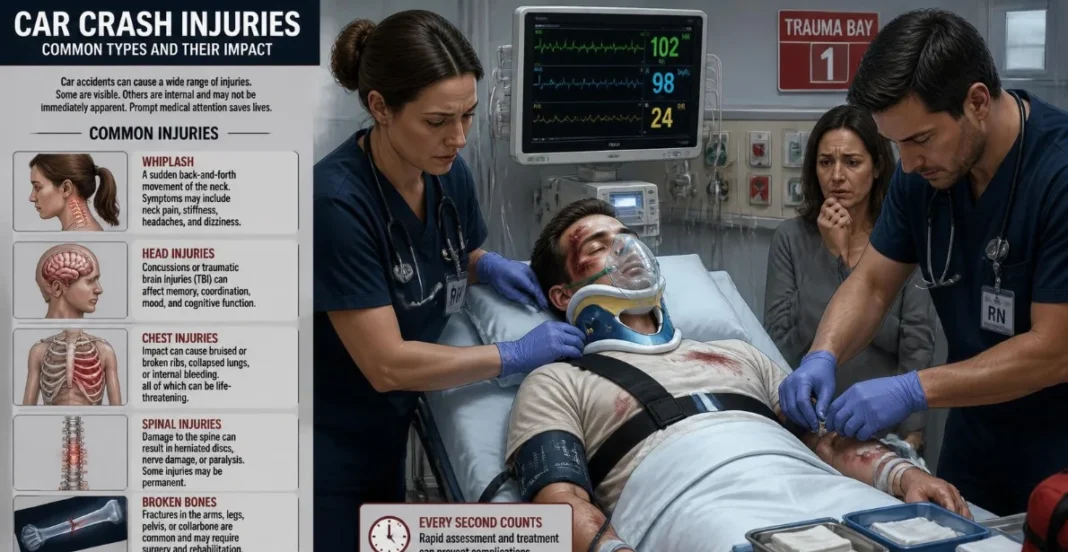

Car crash injuries can range from mild soreness to serious trauma requiring emergency treatment. Some problems are obvious immediately, while others develop hours or days later. Knowing the warning signs can help you protect your health and document important changes.
Direct answer: Car accidents commonly cause whiplash, back injuries, concussions, fractures, bruising, and internal injuries. Some symptoms can appear after the initial shock has passed. Seek emergency care for serious warning signs, and consider medical evaluation after a significant collision even when pain seems minor.
| Key issue | What to know |
| Common injuries | Whiplash, soft-tissue damage, concussion, back injuries, fractures, chest trauma |
| Delayed symptoms | Neck pain, headaches, dizziness, stiffness, numbness, and concentration problems |
| Emergency warning signs | Worsening headache, repeated vomiting, weakness, confusion, seizures, or breathing difficulty |
| Useful records | Medical records, bills, photographs, wage records, police reports, and symptom notes |
| Legal considerations | Fault rules, insurance coverage, damages, and filing deadlines vary by state |
| First priority | Get appropriate medical care before worrying about an insurance claim |
Key Takeaways
- A collision can injure muscles, bones, nerves, the brain, or internal organs.
- Whiplash and concussion symptoms may not become noticeable immediately.
- Serious neurological or breathing symptoms can require emergency treatment.
- Medical documentation may become important when an insurance claim involves injuries.
- State laws can affect fault, available compensation, and lawsuit deadlines.
Common Car Crash Injuries and Their Symptoms

Car Crash Injuries can affect vehicle occupants in several ways during the same collision. Impact forces can move the body suddenly while restraints hold certain areas in place. The location and severity of harm depend on many crash-specific factors.
Whiplash and Other Soft-Tissue Injuries
Whiplash affects the soft tissues of the neck after sudden forward-and-back movement. Symptoms can include stiffness, headaches, shoulder discomfort, and reduced neck movement. MedlinePlus notes that pain does not always appear immediately after an accident.
Muscles, tendons, and ligaments elsewhere can also become strained or sprained. These injuries may cause swelling, tenderness, stiffness, or pain during movement. Diagnostic imaging does not always show every soft-tissue problem clearly.
Concussions and Traumatic Brain Injuries
A concussion can occur when a sudden jolt affects normal brain function. A person does not need to lose consciousness to experience a concussion. Symptoms can involve headaches, dizziness, nausea, memory problems, or difficulty concentrating.
The CDC says mild traumatic brain injury symptoms can appear immediately or develop later. Sleep changes, irritability, light sensitivity, and balance problems can also occur. Any concerning neurological changes deserve appropriate medical attention.
Back, Disc, and Nerve Injuries
A collision can strain muscles or damage structures within the neck and back. Injuries may involve vertebrae, discs, ligaments, joints, or nearby nerves. Symptoms can include back pain, stiffness, spasms, weakness, or reduced movement.
Nerve involvement may cause numbness, tingling, or pain traveling into an arm or leg. These symptoms should not be dismissed because vehicle damage appears minor. The forces affecting occupants and vehicles are not always identical.
Broken Bones and Joint Injuries
Arms, wrists, legs, ribs, and other bones can fracture during a collision. Knees and shoulders can also suffer significant injuries from sudden impact. Some fractures cause immediate pain, swelling, deformity, or difficulty using the injured area.
Joint injuries may include ligament damage, dislocation, or cartilage problems. Symptoms sometimes become clearer after swelling develops. Medical evaluation can determine whether imaging or specialist treatment is appropriate.
Chest, Abdominal, and Internal Injuries
Seat belts and airbags reduce serious injury risks, but significant crashes can still cause chest trauma. Possible injuries include rib fractures, bruising, or damage to internal structures. Abdominal trauma can also affect organs or cause internal bleeding.
Internal injuries are especially concerning because visible signs may be limited. Increasing abdominal pain, faintness, breathing problems, or severe weakness require prompt attention. Emergency clinicians can assess symptoms and determine appropriate testing.
Why Some Injury Symptoms Appear Later
The minutes after a crash can be confusing and stressful. Pain may not fully reflect the extent of an injury during that period. Swelling and inflammation can also become more noticeable as time passes. Whiplash discomfort may develop after the accident rather than at the scene. MedlinePlus specifically notes that whiplash pain can appear later. CDC guidance also says concussion symptoms sometimes emerge hours or days after an injury.
Delayed symptoms do not automatically mean an injury is severe. They also should not be ignored because you initially felt normal. Track new symptoms and discuss concerning changes with a qualified medical professional.
When Car Crash Injuries Need Emergency Care
Certain symptoms after a collision can indicate a potentially dangerous condition. CDC guidance identifies several danger signs following a possible brain injury. Call 911 or seek emergency care when serious symptoms develop.
Warning signs can include the following.
- A headache that becomes worse and does not go away.
- Repeated vomiting.
- New weakness or numbness.
- Seizures or convulsions.
- Slurred speech.
- Increasing confusion or unusual behavior.
- One pupil appearing larger than the other.
- Severe drowsiness or difficulty waking.
- Loss of consciousness.
- Significant breathing difficulty.
- Severe or rapidly worsening pain.
This list cannot cover every medical emergency after a collision. Trust significant or worsening symptoms rather than waiting for a legal or insurance decision. Your immediate medical needs should come first.
What to Do After a Collision Involving Injuries
Your actions after an accident can protect both your health and important records. LawBlink’s guidance on immediate post-accident steps recommends prioritizing safety and checking for injuries. Move away from traffic when doing so is safe and permitted.
After addressing immediate safety concerns, consider these practical steps:
- Get appropriate medical care. Explain that your symptoms followed a motor vehicle collision.
- Report the crash when required. Follow the reporting rules that apply in the state where it happened.
- Photograph relevant details. Document vehicle damage, visible injuries, road conditions, and the surrounding scene when safe.
- Keep medical documents. Save bills, test results, treatment instructions, prescriptions, and appointment records.
- Track missed work. Keep wage statements and employer documentation for collision-related absences.
- Record changing symptoms. Note when pain, headaches, sleep problems, or physical restrictions develop.
- Keep insurance communications organized. Save letters, emails, claim numbers, and other important correspondence.
LawBlink’s personal-injury guide also emphasizes records such as photographs, official reports, medical bills, and witness information. Organized documentation can make later questions easier to answer. It also creates a clearer history of what happened after the accident.
How Injuries Can Affect a U.S. Car Accident Claim
The severity and duration of an injury can influence the evidence needed for an insurance claim. Medical records can connect reported symptoms with examinations, diagnoses, and treatment. Bills and wage records can help document measurable financial losses.
Common claimed losses may include medical expenses, future treatment costs, lost income, and damaged property. Some claims can also involve physical pain or emotional effects. Available compensation depends on applicable state law and the circumstances.
Fault rules are another major consideration. States do not use identical systems for allocating responsibility after a collision. Some states also have special no-fault insurance rules affecting injury claims.
Filing deadlines differ across the United States as well. A deadline can depend on the state and the type of defendant involved. Someone facing serious injuries should avoid assuming another state’s deadline applies.
LawBlink’s guide to accident-related laws provides additional background about legal responsibilities after a collision. Its article about personal injury lawyers also explains how attorneys may collect evidence and communicate with insurers. Those resources can help readers understand the broader claims process.
Records That Can Help Document an Injury
Strong records show how an accident affected your health, finances, and daily activities. Medical documentation is especially important because it records examinations and treatment over time. Consistent records can also clarify when symptoms began or changed.
Useful documents may include the following.
- Emergency room or urgent-care records.
- Physician and specialist notes.
- Physical therapy records.
- Imaging and test results.
- Prescription records.
- Medical invoices.
- Health insurance statements.
- Wage and employment records.
- Photographs of visible injuries.
- Police or crash reports.
- Receipts for related expenses.
- A dated record of symptoms and activity limitations.
Keep original records when possible and store copies securely. Avoid changing medical details to make an injury appear more serious. Accurate documentation is more useful than exaggerated descriptions.
Protect Your Health and Preserve Important Information
After a collision, focus first on your safety and medical needs. Keep records as treatment continues and note any symptoms that develop later. Good documentation can help doctors, insurers, and legal professionals understand the accident’s effects.
For additional preparation, review LawBlink’s guidance about what to do immediately after an accident. You can also read its broader guide for personal injury victims. For significant injuries or disputed liability, consider speaking with a qualified attorney in your state.
Frequently Asked Questions
What are the most common car crash injuries?
Car crash injuries often include whiplash, muscle strains, back injuries, concussions, fractures, bruises, and cuts. Serious collisions can also produce internal injuries or significant neurological trauma. The injuries depend on impact forces, seating position, restraints, and other circumstances.
Can an injury appear days after a car accident?
Yes, certain symptoms may appear after a delay. MedlinePlus states that whiplash pain may take time to develop. CDC guidance also says concussion symptoms can appear hours or days after the injury.
Should I see a doctor if I feel fine after a crash?
Medical needs depend on the circumstances and your symptoms. Significant impacts or developing symptoms can justify prompt professional evaluation. Emergency warning signs require more immediate care rather than routine monitoring.
How do injuries affect a car accident settlement?
Injury severity can affect medical costs, missed work, future treatment, and other claimed losses. Medical evidence can help document the connection between those losses and the collision. Settlement outcomes also depend on fault, insurance coverage, state law, and available evidence.
How long do I have to file an injury lawsuit?
There is no single nationwide deadline for car accident lawsuits. Each state sets filing limits, and special situations can change the applicable deadline. A lawyer licensed in the relevant state can explain the deadline for a specific case.