
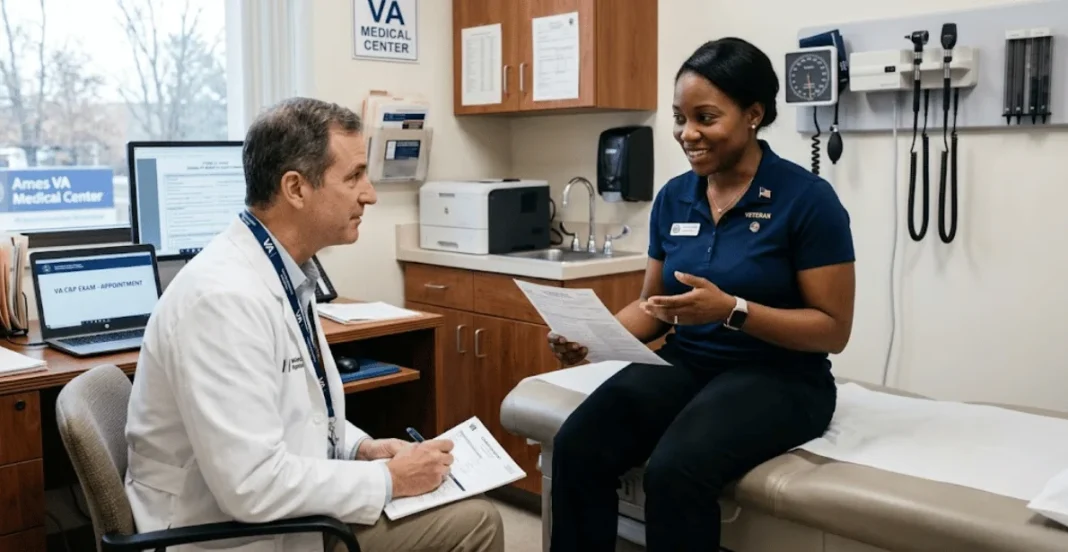

If you have filed a disability claim with the U.S. Department of Veterans Affairs, you may receive a notice asking you to attend a C&P exam. The appointment can affect the evidence VA considers when deciding whether a disability is connected to your military service and how severe the condition is. Understanding what C&P means, what the examiner is looking for, and what happens afterward can help you approach the process with fewer surprises.
C&P stands for Compensation and Pension. In VA disability claims, a C&P exam is a medical evaluation VA may order when it needs more evidence about whether a condition is connected to military service or how severe it is. The examiner documents findings, but VA, not the examiner, makes the benefits decision.
Key Takeaways
C&P means Compensation and Pension, and a C&P exam is also called a VA claim exam.
Not every VA disability claim requires a C&P examination.
The exam gathers medical evidence; it is not a normal treatment appointment.
A VA employee or VA-contracted medical provider may perform the examination.
The examiner may review records, ask questions, perform an examination, and request additional testing.
The examiner does not personally approve or deny your VA disability claim.
Missing a required examination without good cause can seriously affect a claim.
Veterans can request a copy of the final C&P examination report.
If VA later issues an unfavorable decision, several decision-review options may be available.
What Does C&P Mean in a VA Disability Claim?
C&P stands for Compensation and Pension, a term used throughout the Department of Veterans Affairs benefits system. When people ask “what is C&P?” they often mean a Compensation and Pension examination, which VA now commonly calls a VA claim exam. The examination provides medical information VA may need when evaluating a disability compensation or pension claim.
A C&P exam is different from an ordinary medical visit because the examiner’s primary role is evaluation rather than treatment. The provider gathers and records information relevant to the claimed disability and sends an examination report to VA. VA then considers that report, along with medical records, military records, statements, test results, and other evidence, when deciding the claim.
Why Does VA Order a C&P Exam?
VA may order a C&P exam when the evidence already in the claim file is not sufficient to make a decision. Under 38 C.F.R. § 3.159, VA may provide an examination or obtain a medical opinion when certain requirements are met and additional medical evidence is necessary to decide a disability compensation claim. Federal regulations also authorize VA examinations when medical evidence accompanying a compensation or pension claim is inadequate for rating purposes.
The examination can address different questions depending on the claim. VA may need evidence about whether a current disability is connected to an event, injury, disease, or qualifying exposure during military service, or it may need current information about the severity of an already service-connected disability. The resulting medical evidence can therefore influence both service-connection questions and the disability rating VA ultimately assigns.
Common Reasons for a C&P Exam
| Claim situation | What VA may need to determine |
|---|---|
| Initial disability claim | Whether a claimed condition is connected to military service and how severe it is |
| Increased-rating claim | Whether an existing service-connected disability has worsened |
| Multiple claimed disabilities | Medical findings for one or more separate conditions |
| Review examination | Whether the severity of an existing disability has changed |
| Decision review | Additional medical information needed before VA issues another decision |
| Pension claim | The extent of qualifying disability for pension purposes |
Does Every VA Disability Claim Require a C&P Exam?
No, you don’t automatically receive a C&P exam just because you filed a VA disability claim. VA states that it orders an examination when it needs more information to make a decision, and it can decide some claims based on existing medical and other evidence. Under 38 C.F.R. § 3.326, VA may also accept adequate examination reports or medical statements from government or private sources without requiring another examination.
VA may use the Acceptable Clinical Evidence (ACE) process when sufficient medical information is available without requiring an in-person claim examination. In other cases, VA may schedule a veteran for an in-person appointment or, where appropriate, a telehealth examination. The type of evaluation depends on what information VA needs and the medical issues involved in the claim.
What Happens During a C&P Exam?
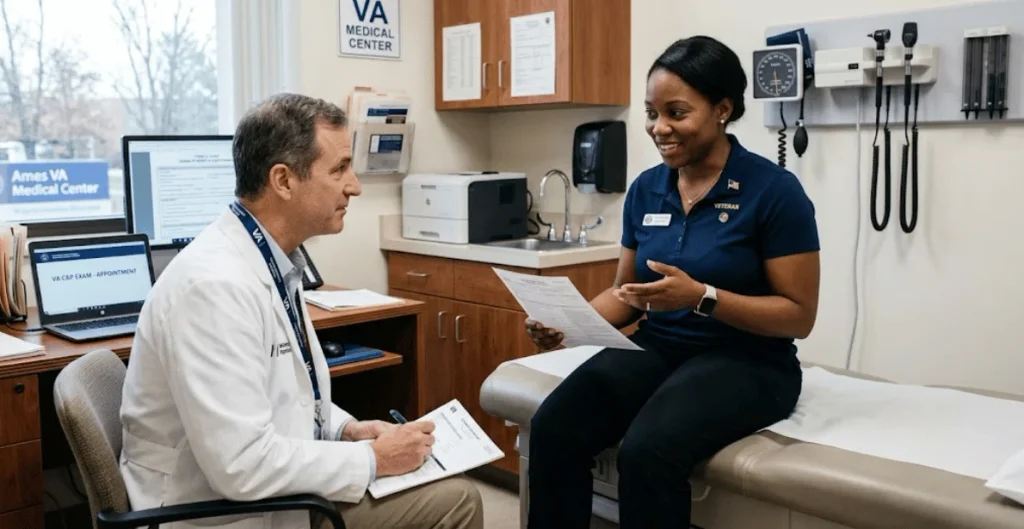
What happens during a C&P exam depends heavily on the disability being evaluated. VA’s own guidance on the VA claim exam explains that the provider may perform a basic physical examination or ask questions based on the medical records in your claim file. The examiner may also use questions from a relevant Disability Benefits Questionnaire, or order additional testing such as X-rays or blood work when necessary. Some examinations may involve little physical contact, while others require more extensive medical evaluation.
The examiner may ask when symptoms began, how frequently they occur, how severe they are, and how they affect ordinary activities or occupational functioning. The provider may also compare what you report with medical records and other evidence already contained in your claim file. Because disabilities differ substantially, an examination for hearing loss, a knee condition, PTSD, migraines, or another condition will not necessarily follow the same process.
What a C&P Examiner Can and Cannot Do
| The examiner may | The examiner does not |
|---|---|
| Review relevant medical records | Make the final benefits decision |
| Ask about symptoms and functional limitations | Guarantee a particular disability rating |
| Perform an appropriate medical examination | Act as your treating physician during the exam |
| Complete a DBQ or medical opinion | Approve or deny your claim at the appointment |
| Request certain additional tests | Normally prescribe treatment or medication for the claimed condition |
| Submit findings to VA | Tell you the final outcome of your claim |
A claim exam should therefore be viewed as an evidence-gathering appointment rather than a hearing or final decision. VA specifically explains that the examiner cannot decide the claim or provide the final examination result to the veteran during the appointment. The ultimate rating decision belongs to VA after it reviews the examination report together with the rest of the evidence.
How Should You Prepare for a C&P Exam?
Preparation should focus on accuracy rather than trying to predict what answer will produce a particular rating. Review the disabilities included in your claim, think carefully about when your symptoms began, and be ready to explain how those symptoms affect normal activities and functioning. Your description should be truthful and specific, without exaggerating problems or minimizing symptoms simply because you are having a relatively good day.
It can also help to review your recent treatment history and identify changes that VA may not yet have received. If you have new non-VA medical records, VA recommends submitting them before the appointment instead of relying on the examiner to add them to the claims file. An examiner may look at records you bring to the appointment, but VA warns that the provider cannot submit those records on your behalf.
C&P Exam Preparation Checklist
Confirm the date, time, location, and whether the appointment is in person or remote.
Review which condition or conditions the examination covers.
Think about the history, frequency, duration, and severity of your symptoms.
Be prepared to describe how the condition affects everyday activities and work.
Submit new private medical records to VA before the examination when possible.
Wear comfortable clothing if the examination may involve movement or range-of-motion testing.
Plan to arrive early for an in-person examination.
Answer questions accurately rather than guessing or attempting to memorize a particular response.
VA currently advises veterans to arrive about 15 minutes early and warns that a provider may cancel an examination if the veteran arrives late. Comfortable clothing can also be useful because some physical examinations require the veteran to move freely. Confirming the appointment in advance can reduce the risk of a scheduling misunderstanding.
What Should You Bring to a C&P Exam?
VA says veterans generally do not need to bring anything special to a claim examination. New non-VA medical evidence should preferably be uploaded, mailed, or submitted through an accredited representative before the appointment so it becomes part of the claim file. If you do bring a new record, the examiner may review it, but the examiner is not responsible for submitting that evidence to VA for you.
Keeping identification and appointment information available is nevertheless sensible because a VA medical center or contractor may need to verify your identity. You can also confirm accommodations or transportation needs when arranging the appointment. If you are unsure what a particular contractor requires, use the contact information in your examination notice rather than assuming every examination location follows identical check-in procedures.
How Long Does a C&P Exam Take?
There is no single standard duration for every C&P examination. VA states that an appointment may last as little as approximately 15 minutes or may continue for an hour or longer, depending on the disabilities claimed and the information needed. A short appointment does not necessarily mean the examiner ignored the claim because the provider may spend additional time outside the appointment reviewing the veteran’s records.
Some veterans also require more than one examination, particularly when they claim several unrelated disabilities or need different specialists. VA may try to schedule multiple examinations together, but separate appointments may still be necessary. The medical complexity of the claim matters more than the raw number of minutes spent face-to-face with an examiner.
Can a C&P Exam Be Done by Telehealth?
Yes, VA may schedule certain claim examinations as phone or video appointments that the veteran can attend from home. Other conditions require an in-person examination because a provider needs to perform physical testing, diagnostic testing, or another assessment that cannot reasonably be completed remotely. VA determines what examination format is appropriate based on the information required for the claim.
Either a VA provider or a VA-contracted provider can perform an examination. VA uses contractors as part of its disability examination system, and the medical findings are submitted back to VA for consideration in the claim. An appointment at a contractor’s office, rather than a VA medical center, does not mean the contractor makes the final rating decision.
What Happens If You Miss a C&P Exam?
Missing a required C&P exam can have significant consequences, but the result depends on the type of claim. Under 38 C.F.R. § 3.655, when VA cannot establish or confirm entitlement without an examination and a claimant fails to report without good cause, an original compensation claim is generally rated based on the existing evidence. When an examination is connected with certain other original claims, a supplemental claim for a previously disallowed benefit, or a claim for increase, the regulation provides for denial.
Federal regulations recognize that legitimate circumstances may prevent someone from attending an appointment. Section 3.655 identifies examples of “good cause,” including illness or hospitalization of the claimant and the death of an immediate family member, while VA guidance lists additional examples depending on the circumstances. If you cannot attend or already missed an examination for a legitimate reason, contact VA or the examination contractor promptly and explain the situation rather than ignoring the notice.
What Happens After a C&P Exam?
After the appointment, the examiner prepares a report and sends it to VA. VA reviews that report along with medical records, military medical and personnel records, test results, statements from the veteran or other people, and other relevant evidence in the claims file. VA then makes its decision and sends the veteran a decision letter explaining the outcome.
The examiner’s report can be important, but it is not supposed to operate as the only evidence in every case. VA’s own explanation of disability ratings states that it considers evidence submitted by the claimant, C&P examination results when required, and other available information. That distinction is important because an unfavorable comment in an examination report does not itself constitute the final VA decision.
How Do You Get a Copy of Your C&P Exam Results?
VA states that veterans cannot obtain the final examination result directly from the provider at the appointment. To request a copy of the final report, VA directs claimants to submit a Freedom of Information Act or Privacy Act request using VA Form 20-10206. You can currently submit the request online, by mail, or in person.
Reading the report may help you understand the documented findings and the medical opinions provided. However, consider the examination report alongside the final decision letter because VA, not the examiner, determines whether the legal requirements for benefits are met. If the final decision is unfavorable, the decision letter becomes especially important because it identifies VA’s findings and available review rights.
What If You Believe the C&P Exam Was Inadequate or Incorrect?
If you believe something went seriously wrong during the examination, document the issue while your memory is fresh. VA encourages veterans who had a bad experience to report concerns, including by contacting the contractor, submitting a written statement to the claim file, contacting VA, or reaching out to the appropriate regional office. Describing specific problems is usually more useful than simply saying the examination felt unfair.
If VA later issues an unfavorable decision, you may have formal decision-review options. The modern VA review system includes Supplemental Claims, Higher-Level Reviews, and Board Appeals, and the right choice depends partly on whether you have new and relevant evidence or believe VA made an error based on the existing record. For most VA benefits, important one-year deadlines can apply to Higher-Level Review or Board Appeal requests, so check the date on the decision letter carefully.
C&P Exam vs. DBQ vs. ACE Review
These terms often appear together, but they do not mean the same thing. Knowing the difference makes VA correspondence easier to understand and helps explain why one veteran may attend an examination while another person’s medical evidence is reviewed without an in-person appointment. Each term describes a different part of the evidence-development process.
| Term | Meaning |
|---|---|
| C&P exam | A Compensation and Pension examination used to gather medical evidence for a VA claim |
| DBQ | A Disability Benefits Questionnaire used to record medical findings relevant to a specific condition |
| ACE review | Acceptable Clinical Evidence process that may allow VA to evaluate a claim using existing medical information instead of requiring an in-person examination |
| VA rating decision | VA’s formal decision concerning service connection, disability evaluation, benefits, and related issues |
A private health care provider can sometimes complete an appropriate DBQ for a veteran, although VA does not reimburse the cost of having a private provider complete the form. Submission of private medical evidence also does not guarantee that VA will never request another examination. VA decides whether the evidence available is adequate to adjudicate the claim.
When Should You Consider Getting Help With a VA Disability Claim?
Not every veteran needs a lawyer or representative simply because VA scheduled a C&P exam. A VA-accredited Veterans Service Organization representative, accredited claims agent, or accredited attorney can help file claims and request decision reviews, and VA notes that accredited VSO representation is free. Assistance may be especially useful when the case involves a prior denial, complicated medical evidence, conflicting opinions, a proposed rating reduction, or uncertainty about the correct review option.
VA accreditation matters because veterans’ benefits representation follows specialized federal rules. A general attorney may be highly experienced in another area of law but may not be the right person to handle a VA benefits matter. For broader educational material about lawyers and legal representation, readers can also explore LawBlink’s Find A Lawyer section, while VA’s own accreditation resources should be used when selecting someone to represent a VA benefits claim.
Frequently Asked Questions About C&P Exams
What does C&P stand for?
C&P stands for Compensation and Pension. In a VA disability claim, the term commonly refers to a Compensation and Pension examination, also called a VA claim exam. The examination helps VA obtain medical evidence needed to evaluate certain benefit claims.
Is a C&P exam a good sign?
A C&P appointment by itself does not mean that VA intends to approve or deny the claim. It generally means VA has determined that it needs medical examination evidence or an opinion before it can decide the issue. The outcome still depends on the complete evidentiary record and the applicable VA rules.
Does the C&P examiner decide my disability rating?
No, the examiner does not issue the final VA disability rating. The examiner documents medical findings or provides requested medical opinions, while VA considers those findings along with the other evidence in the claim file. VA then assigns a rating if it determines that the disability qualifies for compensation.
Can I receive VA disability without a C&P exam?
Yes, VA can decide some claims without an in-person C&P examination when it already has adequate medical evidence. In appropriate cases, VA may use existing evidence or the ACE process instead of requiring another examination. Whether an examination is necessary depends on the evidence and the issues VA must resolve.
Can I refuse a C&P exam?
A veteran can choose not to attend, but failing to report for an examination that VA needs to decide the claim can have serious consequences. The result depends on the type of claim and whether you had good cause for missing the appointment. Under 38 C.F.R. § 3.655, some claims may be decided on the existing evidence while others may be denied.
Can I challenge a bad C&P exam?
You can report concerns about an examination and submit information explaining what you believe went wrong. If VA later issues a decision you disagree with, the available review paths may include a Supplemental Claim, Higher-Level Review, or Board Appeal, depending on your circumstances. Because evidence rules and deadlines differ among those options, review the decision notice carefully before choosing a route.
How important is a C&P exam?
A C&P examination can be an important part of a VA disability claim because its findings may address service connection, current severity, or other medical questions VA needs to resolve. It is not, however, the entire claim because VA must consider the relevant evidence in the record before deciding. Veterans should take the appointment seriously, but remember the examiner does not personally determine the final benefits award.
Final Thoughts
So, what is C&P? For most veterans encountering the term during a disability claim, C&P refers to the Compensation and Pension exam, a VA-requested medical evaluation designed to gather evidence needed to decide a benefits claim. Knowing the purpose of the appointment, attending as scheduled, describing symptoms accurately, submitting relevant evidence properly, and understanding what happens afterward can help you navigate this stage of the VA disability process more confidently.
The C&P examiner provides medical information, but VA makes the legal and benefits determination after considering the complete record. If an examination appears inaccurate or an eventual decision does not reflect the evidence, formal review procedures may be available. Veterans who need individual assistance can seek help from a VA-accredited VSO representative, claims agent, or attorney.
Legal Disclaimer: This article provides general educational information about the U.S. VA disability claims process and is not individualized legal advice. VA rules, forms, procedures, and individual claim circumstances can change or produce different outcomes. Veterans dealing with a specific claim or appeal should review current VA guidance and consider consulting a properly VA-accredited representative when appropriate.