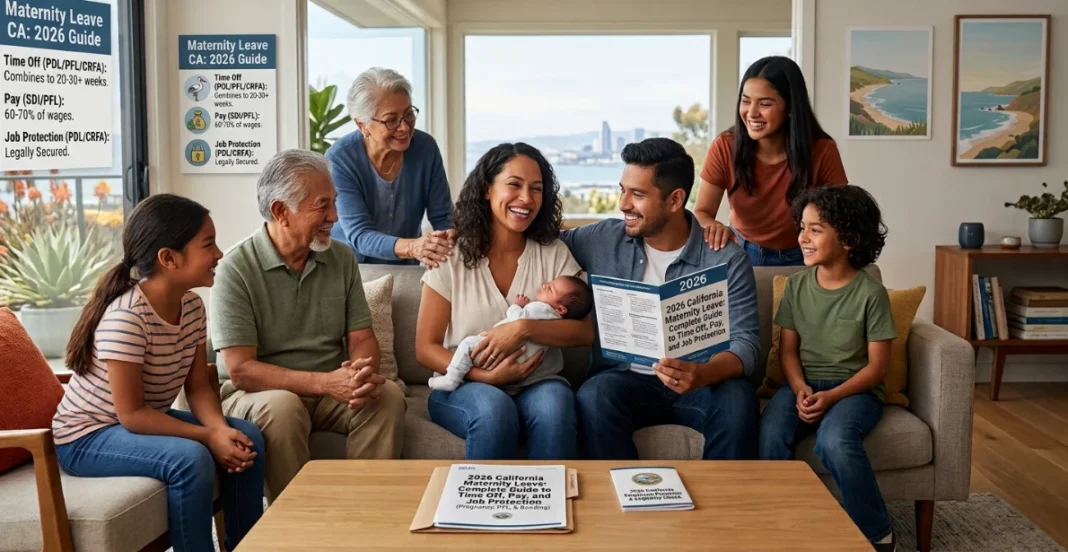

If you are wondering how long is maternity leave in California, there is no single number that applies to every employee. California separates pregnancy-related disability leave, baby-bonding leave, federal family leave, and wage-replacement benefits into different programs, each with its own eligibility rules. A qualifying employee who gives birth may receive several months of protected time off by combining California Pregnancy Disability Leave with California Family Rights Act bonding leave.
The important distinction is that time off, job protection, and pay are not the same benefit. PDL and CFRA protect jobs, while SDI and PFL replace wages. Understanding how the programs overlap is the easiest way to estimate how much leave you may actually receive.
Quick answer: California employees who give birth may receive up to four months of medically necessary Pregnancy Disability Leave, followed by as much as 12 additional weeks of CFRA baby-bonding leave if eligible. That creates a maximum potential protected period of about 29⅓ weeks, although an uncomplicated pregnancy usually results in less pregnancy-disability time.
California Maternity Leave at a Glance
| Program | Main purpose | Maximum time | Job protection? | Provides pay? |
|---|---|---|---|---|
| Pregnancy Disability Leave (PDL) | Pregnancy, childbirth, or related medical disability | Up to 4 months, calculated as about 17⅓ weeks for a standard schedule | Yes, if covered | Not by itself |
| California Family Rights Act (CFRA) | Bonding with a new child | Up to 12 workweeks | Yes, if eligible | Not by itself |
| Family and Medical Leave Act (FMLA) | Pregnancy-related serious health conditions and bonding | Up to 12 workweeks | Yes, if eligible | No |
| State Disability Insurance (DI) | Wage replacement while medically unable to work | Depends on certified disability; pregnancy commonly includes pre-birth and postpartum recovery | No | Yes |
| Paid Family Leave (PFL) | Wage replacement for bonding | Up to 8 weeks in a 12-month period | No | Yes |
California’s leave system can therefore provide substantially more than the 12 weeks many workers associate with federal FMLA. Employees can receive up to 29⅓ weeks by combining PDL and CFRA. Uncomplicated pregnancies usually require much shorter leave timelines.
Pregnancy Disability Leave Can Provide Up to Four Months
California PDL covers disability from pregnancy, childbirth, or related conditions. Qualified employees at businesses with 5+ workers get four months’ PDL. Unlike CFRA, there is no minimum number of months or hours the employee must have worked before becoming eligible. A health care provider determines how long the pregnancy-related disability actually lasts.
California calculates the four-month entitlement according to the employee’s normal work schedule. Employees receive up to 17⅓ weeks of PDL, based on their average weekly hours. PDL can cover more than recovery immediately following delivery. Qualifying disabilities include morning sickness, gestational diabetes, preeclampsia, and prenatal or postnatal care. Medical certification is therefore important because the appropriate period can differ considerably from one pregnancy to another.
How Long Is the Typical Pregnancy Disability Period?
California EDD usually approves disability benefits four weeks before expected delivery. Postpartum benefits cover 6–8 weeks unless a doctor certifies extra complications. Those timeframes describe typical DI disability periods and should not be confused with the maximum four-month PDL entitlement.
Typical disability timelines last 10 weeks for vaginal delivery and 12 for C-sections. Medical providers can extend or advance leave based on work ability. Conversely, an employee who remains able to work until close to delivery may use less disability leave before birth.
CFRA Can Add 12 Weeks of Baby-Bonding Leave
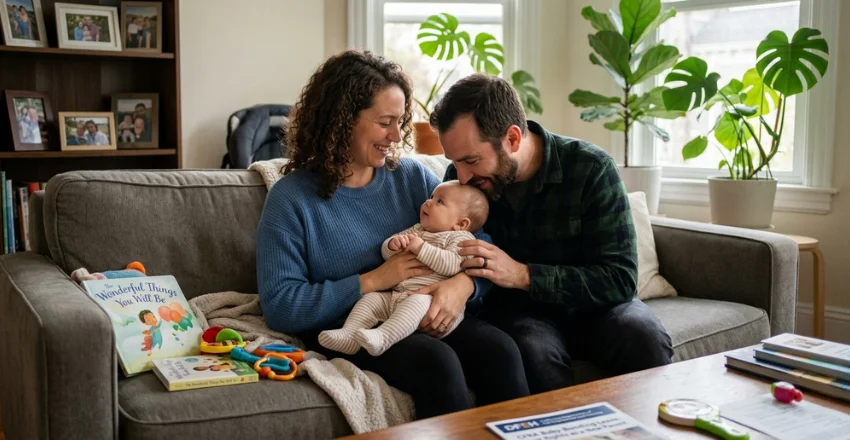
After PDL, eligible employees can take 12 weeks of CFRA bonding leave. Bonding leave applies to birth, adoption, or foster care within one year. For eligible birth parents, CFRA bonding leave runs after PDL.
CFRA has stricter employee eligibility requirements than PDL. CFRA requires 12 months’ employment, 1,250 hours worked, and 5+ employees. As a result, someone who recently started a job may qualify for PDL while being ineligible for CFRA bonding leave.
CFRA bonding rights are not limited to the person who gave birth. Eligible fathers, partners, adoptive parents, and foster parents can also qualify for baby-bonding leave, even though pregnancy-disability leave itself applies to the employee experiencing the pregnancy-related disability. This distinction is why “parental leave” is often a more accurate term than “maternity leave” when discussing bonding rights.
What Is the Maximum Combined Leave?
A birth parent who is medically disabled for the full four-month PDL maximum and who separately qualifies for the complete 12 weeks of CFRA bonding leave could potentially receive about 29⅓ weeks of protected leave. That is approximately 6¾ months and is often rounded to “about seven months” when California maternity-leave rights are discussed. The actual entitlement depends on medical necessity during the PDL portion and separate CFRA eligibility during the bonding portion.
A more common uncomplicated timeline is shorter because pregnancy disability normally does not last the full four months. For example, four weeks before delivery plus six weeks after a vaginal delivery and 12 weeks of CFRA bonding leave produces approximately 22 weeks away from work. Four weeks before delivery, eight weeks after a routine C-section, and 12 weeks of bonding produces approximately 24 weeks.
| Example | Pregnancy-disability period | CFRA bonding | Approximate total |
|---|---|---|---|
| Uncomplicated vaginal birth | 4 weeks before + 6 weeks after | 12 weeks | 22 weeks |
| Routine C-section | 4 weeks before + 8 weeks after | 12 weeks | 24 weeks |
| Maximum medically necessary PDL | Up to 17⅓ weeks | 12 weeks | Up to 29⅓ weeks |
These examples assume that the employee qualifies for both job-protection programs and that a health professional supports the pregnancy-disability period. They also do not mean every week will be paid, because wage replacement operates under separate California benefit programs. Employer-provided parental leave, PTO, sick leave, union benefits, or another company policy may further affect an individual employee’s situation.
How FMLA Fits With California Maternity Leave
The federal Family and Medical Leave Act gives eligible employees of covered employers up to 12 workweeks of unpaid, job-protected leave for qualifying family and medical reasons, including pregnancy-related serious health conditions, childbirth, and bonding with a new child. Private-sector FMLA coverage generally requires an employer with at least 50 employees. The employee must usually have at least 12 months of service, 1,250 hours worked in the previous 12 months, and at least 50 employees within 75 miles of the worksite. FMLA also requires continuation of group health coverage under the same conditions while eligible leave is being used.
FMLA usually does not create an extra 12 weeks on top of California leave. When both laws apply, FMLA generally runs concurrently with PDL during a pregnancy-related disability and can also overlap with qualifying bonding leave, depending on how much federal leave remains. California’s separate CFRA entitlement after PDL is therefore the reason some qualifying California birth parents can receive considerably more protected time than federal FMLA alone would provide.
Workers who want additional background on federal leave disputes can also review LawBlink’s guide to FMLA violation attorneys. That resource addresses federal FMLA rights and situations in which an employee may believe protected leave was improperly denied or interfered with. California-specific PDL and CFRA issues should still be evaluated under the separate state-law requirements discussed here.
Is Maternity Leave Paid in California?
California’s PDL, CFRA, and FMLA laws mainly establish rights to leave and job protection rather than a requirement that an employer continue an employee’s full salary. Eligible employees may instead receive partial wage replacement through California State Disability Insurance while medically unable to work and through Paid Family Leave while bonding with a new child. Employer-paid parental leave, PTO, vacation, sick leave, or collective bargaining benefits can sometimes supplement those state payments.
For claims beginning in 2026, California DI and PFL benefits generally replace about 70% to 90% of qualifying wages, depending on the worker’s income. California’s Employment Development Department lists a 2026 maximum weekly benefit amount of $1,765 on its Disability Insurance benefit payment amounts page, although a worker’s actual payment depends on base-period earnings and other eligibility rules. Lower-income workers generally receive the higher replacement percentage.
State Disability Insurance During Pregnancy
State Disability Insurance can provide partial wage replacement when pregnancy, childbirth, or a related condition prevents an eligible worker from performing regular work. For an uncomplicated pregnancy, benefits commonly cover up to four weeks before the expected delivery date and six weeks after a vaginal delivery or eight weeks after a C-section, while longer medically certified disability may qualify for additional benefits. DI itself does not protect the employee’s job, so job protection must come from PDL, FMLA, CFRA, another law, or an employer policy.
California DI can potentially pay benefits for much longer than the typical pregnancy-recovery period when a qualifying disability continues. The EDD states that Disability Insurance may provide benefits for up to 52 weeks in qualifying cases, but that does not mean PDL provides 52 weeks of job protection. Employees whose pregnancy-related disability continues beyond PDL may need to examine other protections, including reasonable accommodation under California law.
Paid Family Leave During Baby Bonding
California’s Employment Development Department administers Paid Family Leave, which can provide eligible workers with up to eight weeks of partial wage replacement within a 12-month period for bonding with a new child. PFL benefits can be used during the first year following a child’s birth, adoption, or foster placement, and the eight weeks do not necessarily have to be taken all at once. A new mother with an active pregnancy DI claim is generally sent information for transitioning to PFL after the pregnancy-disability benefits end.
Paid Family Leave should not be confused with 12 weeks of CFRA bonding leave. PFL pays benefits for up to eight weeks, while an eligible worker may have up to 12 weeks of CFRA job protection, creating a possible period when the employee remains on protected bonding leave but has exhausted state PFL payments. The EDD expressly states that PFL provides benefit payments rather than job protection.
Job Protection and Pay Run on Different Timelines
A useful way to plan maternity leave is to create two calendars instead of one. The first should track job protection under PDL, CFRA, and possibly FMLA, while the second should track income from DI, PFL, employer-paid parental leave, PTO, sick leave, or other available benefits. Keeping those timelines separate helps prevent the common assumption that receiving PFL automatically means a worker’s position is legally protected.
This distinction becomes particularly important during the final portion of CFRA bonding leave. A worker could have four weeks of CFRA protection remaining after exhausting eight weeks of PFL payments, assuming the full 12 weeks of bonding leave are taken. Whether those remaining weeks are paid depends on employer policies, accrued paid leave, or other benefits available to the employee.
Who Qualifies for Each Type of California Leave?
| Requirement | PDL | CFRA bonding | Federal FMLA |
|---|---|---|---|
| Employer size | 5+ employees | 5+ employees | Usually 50+ employees for private employers |
| 12 months of service required | No | Yes | Yes |
| 1,250 hours required | No | Yes | Yes |
| Pregnancy disability required | Yes | No | Not for bonding |
| Available to non-birthing parent for bonding | No | Yes | Yes |
| Main maximum | Up to 4 months | 12 weeks | 12 weeks |
The differences mean that an employee should not assume that eligibility for one program guarantees eligibility for another. A newly hired pregnant employee may have PDL rights even though the worker has not yet accumulated enough service for CFRA or FMLA. Similarly, someone may qualify for California PFL payments without having job protection under the leave statutes because wage benefits and employment-protection laws use different tests.
How to Plan and Request Maternity Leave
Employees should begin by checking the employer’s leave policy and determining which laws may apply based on employer size, length of service, hours worked, and medical circumstances. California’s Civil Rights Department advises employees to give employers at least 30 days’ notice for PDL or CFRA leave when the need for leave is foreseeable. Medical certification may also be requested for pregnancy-disability leave, so workers should coordinate with both their health care provider and employer.
A practical planning checklist includes:
Confirm how many employees your employer has.
Check how long you have worked there and your hours worked during the previous 12 months.
Ask your health care provider when pregnancy disability is expected to begin and end.
Determine whether your paystub shows California State Disability Insurance contributions, often identified as CASDI.
Review employer-paid maternity, parental, vacation, PTO, and sick-leave policies.
Map PDL, CFRA, and FMLA separately from DI and PFL payments.
Give advance notice when possible and keep copies of leave requests, medical certifications, and employer responses.
Confirm your expected transition from pregnancy disability to baby-bonding leave before the disability period ends.
Good documentation can become especially important if there is later disagreement about the dates or type of leave requested. Employees should retain copies of written notices, HR communications, medical certifications, benefit applications, and return-to-work correspondence when they can lawfully do so. A written timeline is also useful when several leave programs overlap.
What Happens if Pregnancy Complications Last Longer?
The standard six- or eight-week postpartum recovery period is not a fixed legal cutoff when an employee remains medically disabled. A licensed health professional may certify a longer disability period when complications prevent the worker from performing regular job duties, subject to the applicable leave and benefit rules. State Disability Insurance may therefore continue longer than the routine postpartum period when the medical requirements are satisfied.
Once the maximum PDL entitlement has been exhausted, additional job-protected time is not automatic under PDL itself. California’s Civil Rights Department explains that an employee may still have rights under CFRA, where applicable, and may also be entitled to reasonable accommodation under the Fair Employment and Housing Act, which can sometimes include additional leave. Because those issues depend heavily on individual circumstances, employees facing an extended disability should examine their specific employment situation rather than assuming that DI benefits and job protection end on the same date.
What if an Employer Denies Leave or Retaliates?
California law provides protections for qualifying pregnancy-disability and family leave, while federal law separately protects eligible FMLA leave. An employer’s denial is not necessarily unlawful because eligibility and notice requirements still matter, but an employee who believes protected leave was denied, interfered with, or followed by retaliation should preserve relevant documents and examine which law applies. The California Civil Rights Department handles state employment protections, while the U.S. Department of Labor administers and enforces federal FMLA requirements.
Employees dealing with broader allegations of workplace discrimination or retaliation can also review LawBlink’s civil rights attorney guide for information about preserving evidence and deciding when legal advice may be useful. Pregnancy and leave disputes can involve several overlapping statutes, so the correct legal route depends on the reason for leave, employer size, employee eligibility, and the action the employer allegedly took. Speaking with a qualified California employment attorney may be appropriate when a worker needs advice about a specific dispute.
Final Takeaway
California maternity leave is best understood as several separate protections that can work together rather than one fixed leave program. For a qualifying birth parent, medically necessary PDL can last up to four months and may be followed by as much as 12 weeks of CFRA baby-bonding leave. DI and PFL can replace part of wages during qualifying portions of that absence. Federal FMLA may provide additional legal protection but generally overlaps with state leave instead of simply adding another 12 weeks.
For many uncomplicated pregnancies, a practical estimate is approximately 22 weeks when a vaginal delivery follows four weeks of pre-birth disability. The estimate rises to approximately 24 weeks when a C-section requires eight postpartum weeks, assuming the employee then uses the full 12 weeks of CFRA bonding leave. The legal maximum can be longer when pregnancy disability continues for the full PDL entitlement, and medical complications can change both the disability and benefits timeline. Employees should confirm employer size, service history, hours worked, medical certification, state benefit eligibility, and employer policies before setting a final leave or return-to-work date.
Frequently Asked Questions
How long is maternity leave in California in 2026?
California does not provide one universal maternity-leave period, but qualifying birth parents can potentially combine up to four months of medically necessary PDL with up to 12 weeks of CFRA bonding leave. The maximum combined protected period can therefore reach approximately 29⅓ weeks when the full PDL entitlement is medically required. Many uncomplicated pregnancies result in closer to 22 to 24 weeks when typical pregnancy disability and 12 weeks of bonding leave are combined.
How many weeks do you get after a vaginal birth in California?
For an uncomplicated vaginal delivery, California DI commonly recognizes approximately six weeks of postpartum disability benefits, although a health professional can certify more time if medically necessary. An eligible employee may then transition into up to 12 weeks of CFRA bonding leave after the pregnancy-related disability ends. When four weeks of pre-birth disability are also used, the combined protected timeline can commonly reach about 22 weeks for an employee who qualifies for both PDL and CFRA.
How long is maternity leave after a C-section in California?
An uncomplicated C-section commonly qualifies for up to eight weeks of postpartum Disability Insurance rather than the six weeks normally associated with a vaginal delivery. When four weeks of pre-delivery disability and 12 weeks of CFRA bonding leave are added, a qualifying employee could have approximately 24 weeks away from work. Complications can justify a longer medically certified disability period, while the four-month PDL maximum still applies to PDL itself.
Is California maternity leave fully paid?
California does not generally require PDL, CFRA, or FMLA to provide an employee’s full normal salary. DI and PFL may instead replace approximately 70% to 90% of qualifying wages for eligible 2026 claims, subject to a maximum weekly benefit of $1,765. Employer-paid parental leave, PTO, sick leave, or another employment benefit may provide additional compensation.
Do fathers and non-birthing parents get leave in California?
Eligible fathers and other non-birthing parents can receive up to 12 weeks of CFRA leave to bond with a new child, provided they satisfy CFRA eligibility requirements. They may also qualify for up to eight weeks of California PFL wage-replacement benefits and, when applicable, federal FMLA bonding leave. Pregnancy Disability Leave normally does not apply because it covers the employee’s own pregnancy-related disability.
Does FMLA give me another 12 weeks after California leave?
Usually not, because FMLA frequently runs at the same time as California leave rather than adding a separate 12-week block. During a pregnancy-related disability, FMLA can run concurrently with PDL for employees who qualify for both, and any remaining FMLA may overlap with other qualifying leave. California’s separate CFRA bonding entitlement after PDL is what can produce a longer overall protected absence for qualifying employees.
Can I get maternity leave if my employer has fewer than five employees?
California PDL and CFRA generally apply to employers with five or more employees, so employees of smaller employers may not receive those specific statutory job protections. They may still have other rights or benefits depending on the circumstances, including employer policies or eligibility for California wage-replacement programs. Because receiving DI or PFL does not itself protect a job, workers at very small employers should verify their specific protection before relying on the benefit period as guaranteed leave.
This article provides general legal information for a U.S. audience and is not legal advice. Employment and benefit rights can depend on individual facts, employer policies, collective bargaining agreements, medical certification, and changes in federal, state, or local law. Employees with a specific dispute should consider guidance from the appropriate government agency or a qualified California employment attorney.