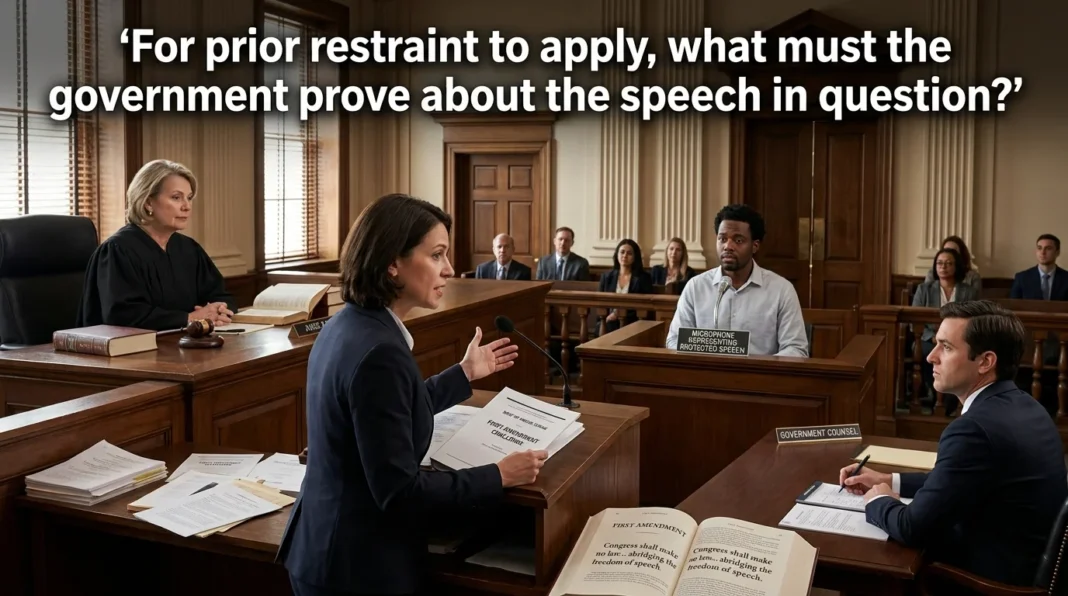

For prior restraint to apply, what must the government prove about the speech in question? In the classroom version of this question, the expected answer is that the speech must present a clear and identifiable danger. In constitutional litigation, however, the government carries a heavy, context-specific burden to justify stopping protected expression before it occurs.
| Key point | What it means |
| Expected quiz answer | The speech must present a clear and identifiable danger. |
| Constitutional baseline | A prior restraint faces a strong presumption against constitutional validity. |
| Government’s burden | The government must provide an unusually strong justification for stopping expression before publication. |
| National-security cases | The Pentagon Papers case shows that broad claims of serious harm may still fail to meet that burden. |
| Fair-trial cases | Courts must consider the threatened harm, alternatives to censorship, and whether the proposed restriction would be effective. |
| Key cases | Near v. Minnesota, New York Times Co. v. United States, and Nebraska Press Association v. Stuart. |
Key takeaway: The short test-prep answer is “clear and identifiable danger.” For real First Amendment analysis, the rule is broader. Courts begin with a strong presumption against advance censorship and require the government to justify it based on the facts, the legal setting, available alternatives, and the likelihood of harm.
What Prior Restraint Means Under the First Amendment
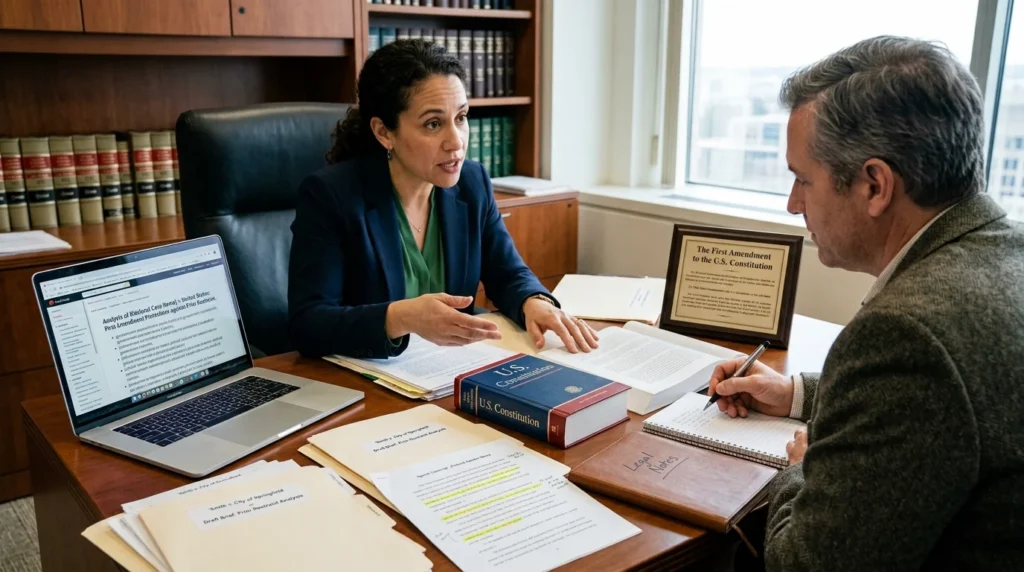
A prior restraint is a government restriction that prevents speech or publication before it occurs. An injunction blocking a newspaper from publishing material is a classic example.
That timing matters. Courts treat advance suppression as especially serious because it can silence protected expression before the public ever receives it. The Supreme Court has repeatedly held that such restrictions carry a heavy presumption against constitutional validity.
This does not mean every form of speech is immune from regulation. It means the government begins from a difficult position when it asks a court or licensing authority to stop expression in advance.
For Prior Restraint to Apply, What Must the Government Prove About the Speech in Question?
For a multiple-choice or introductory civics question, the expected response is usually that the speech presents a clear and identifiable danger.
A constitutional-law answer requires more care. The Supreme Court has not reduced every advance-censorship case to that single phrase. Instead, its cases emphasize a heavy government burden. The required showing changes depending on the type of restriction and the governmental interest involved.
The Court has also moved away from treating the older “clear and present danger” formula as a universal standard. Later cases examine the specific danger, the certainty of harm, available alternatives, and the likely effectiveness of the proposed restriction.
That distinction matters on exams. A short quiz may expect one phrase, while a law-school analysis should identify the broader constitutional framework.
Why the Government Faces Such a Heavy Burden
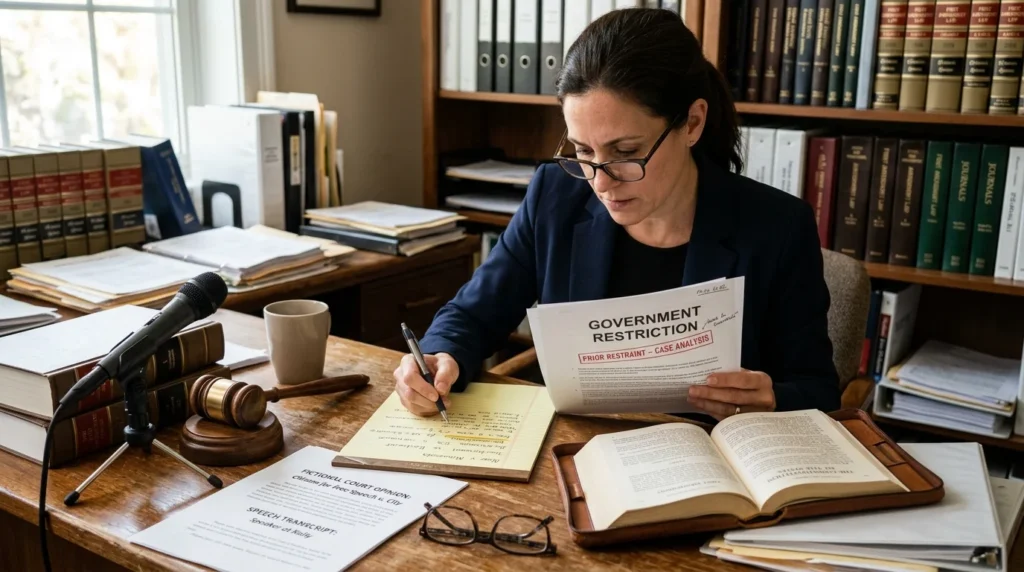
The First Amendment protects more than a speaker’s right to speak. It also protects the public’s ability to receive information without improper government censorship.
Stopping material before publication can cause harm that a later court decision cannot fully repair. Once a news story, protest message, book, or political argument misses its moment, later permission to publish may have little practical value. Supreme Court cases therefore demand an unusually strong justification before approving advance suppression.
Near v. Minnesota
In Near v. Minnesota, the Supreme Court invalidated a Minnesota procedure that allowed authorities to shut down a newspaper as a public nuisance. The decision became a foundation of modern constitutional doctrine concerning restrictions imposed before publication.
The Court recognized that constitutional protection is not absolute. It discussed narrow situations involving matters such as wartime military information and incitement to violence. Those examples were exceptions, not a general license to censor speech whenever officials predicted harm.
The Pentagon Papers Case
The issue became even clearer in New York Times Co. v. United States. The federal government sought court orders preventing newspapers from publishing classified material about the Vietnam War.
The Supreme Court refused to uphold the injunctions. Its per curiam opinion concluded that the government had failed to meet the heavy burden required to justify an advance restriction.
Several concurring opinions described the necessary showing in even stricter terms. Justice Stewart discussed whether publication would cause direct, immediate, and irreparable injury. Justice Brennan used similarly demanding language concerning the immediacy of the threatened consequences.
Those formulations are important, but they appeared in separate concurring opinions. They should not be presented as a single universal majority test governing every later case.
What Nebraska Press Adds When Fair-Trial Rights Are at Stake
Free-press rights can conflict with another constitutional interest: a criminal defendant’s right to a fair trial. In Nebraska Press Association v. Stuart, the Supreme Court reviewed an order limiting press reports about a highly publicized murder case. The Court still held the government to a demanding standard.
Its analysis focused on three practical questions:
- How serious and certain is the threatened harm? A court needs evidence, not speculation, that publicity threatens a fair trial.
- Would less restrictive measures work? Courts should consider alternatives such as jury screening, jury instructions, venue changes, or other trial-management measures.
- Would the publication ban solve the problem? A restriction is difficult to justify if the information is already public or can spread through other channels.
The order in Nebraska Press failed because the feared harm remained too speculative, alternatives had not been shown to be inadequate, and the restriction’s effectiveness was uncertain.
This case shows why a vague prediction of danger is not enough. Courts examine whether the government’s evidence and proposed remedy fit the actual threat.
When Can the Government Stop Speech Before Publication?
Advance restrictions remain possible in narrow circumstances, but the government must do more than show that expression is offensive, embarrassing, controversial, or potentially harmful.
Near recognized exceptional categories in which unusually serious governmental interests may support a restraint. The precise constitutional analysis still depends on the type of speech, the government action involved, and the surrounding circumstances.
Licensing systems raise another issue. In Freedman v. Maryland, the Supreme Court required procedural safeguards when a government censorship system required filmmakers to submit films for approval before public exhibition.
Under that framework, the government had to bear the burden of proving that the expression was unprotected. Any temporary restriction also had to be accompanied by prompt procedures and timely judicial review.
These safeguards reduce the risk that officials can suppress lawful expression by delaying a decision or forcing speakers to prove that they have a right to speak.
Prior Restraint vs. Punishment After Publication
The First Amendment treats stopping expression before publication differently from imposing lawful consequences after publication.
| Issue | Before publication | After publication |
| Government action | Blocks expression before the public receives it | Seeks to impose liability after the expression occurs |
| Constitutional concern | Risk of silencing protected speech in advance | Whether a valid law permits later liability |
| Typical examples | Injunctions and censorship systems | Certain defamation claims or criminal prosecutions |
| Core question | Has the government justified advance suppression? | Does the later penalty satisfy applicable constitutional requirements? |
The Court made clear that rejecting advance censorship does not necessarily protect a publisher from every form of later liability.
The Pentagon Papers litigation reflects the same distinction. The government’s failure to justify an injunction did not automatically resolve every possible question concerning legal consequences after publication.
That difference is essential. The First Amendment may forbid the government from stopping publication while leaving separate questions about later liability for another proceeding.
How to Answer This Question on a Quiz or Law Exam
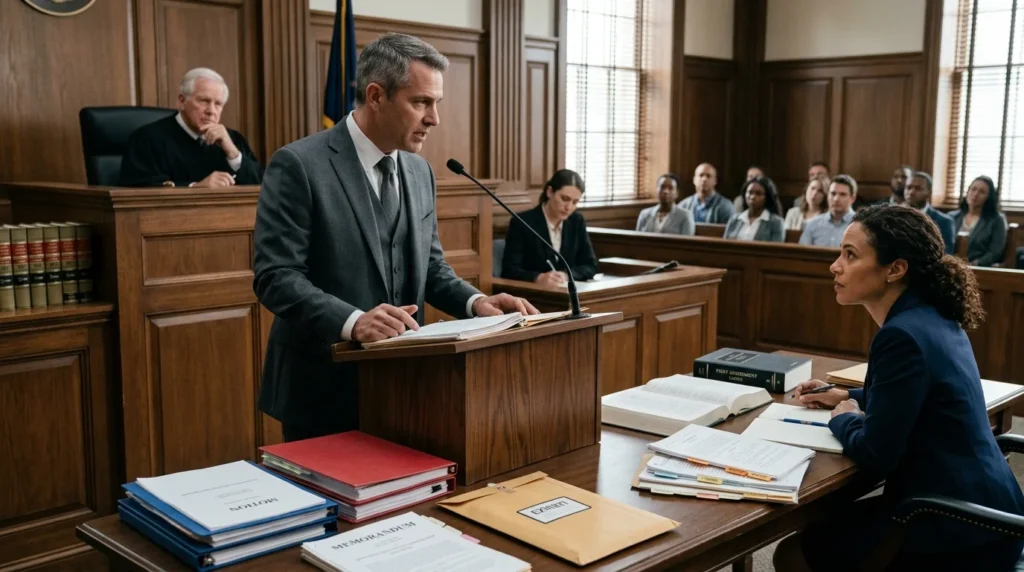
If this question appears on a standard multiple-choice test, choose the option stating that the speech must present a clear and identifiable danger.
For a constitutional-law essay, add the doctrine behind that shorthand. Explain that advance censorship is strongly disfavored. State that the government bears a heavy burden and must support its claimed danger with specific facts.
Then discuss the relevant setting. A national-security dispute, a fair-trial order, a licensing scheme, and a case involving allegedly unprotected speech can each entail different legal tests and procedural safeguards.
Citing Near, the Pentagon Papers case, and Nebraska Press will usually make the analysis more accurate than relying on a single memorized phrase.
Keep Reading About Constitutional Rights
Understanding free-speech doctrine becomes easier when you compare it with other constitutional protections. LawBlink’s guide to Miranda rights during police questioning explains when another well-known constitutional safeguard becomes relevant.
You can also review LawBlink’s discussion of unlawful arrest and constitutional remedies, which addresses what may happen when government officials violate protected rights.
For the boundary between protected expression and civil liability, LawBlink’s coverage of Alex Jones, lawyers, and defamation issues provides another useful speech-law context.
Frequently Asked Questions
For a typical quiz, the expected answer is that the speech presents a clear and identifiable danger. In court, however, the government faces a heavy constitutional burden that depends on the type of restriction and the alleged harm.
No. The Supreme Court has recognized that exceptional circumstances may justify advance restrictions. Still, such measures begin with a strong presumption against constitutional validity.
Not exactly. The Court’s per curiam decision focused on the government’s failure to meet its heavy burden. More specific language about direct or immediate harm appeared in separate concurring opinions.
Not automatically. Near rejected an advance suppression scheme even though the publication had been accused of being scandalous and defamatory. The Court distinguished censorship before publication from possible liability after publication.
Nebraska Press directs courts to consider the seriousness of the threat, whether less restrictive alternatives can protect the trial, and whether the proposed restriction is likely to be effective.